The best water-based cabinet paint depends on your surface, desired finish, and project size. DWIL is a practical pick for small cabinet and vanity projects because its listing identifies a water-based formula and includes application tools. Jungarian suits buyers seeking a low-odor, one-step furniture paint, while Rust-Oleum Cabinet Transformations is designed for cabinets and trim but does not specify its paint base in the supplied product details. Compare the product labels and prepare surfaces as directed before painting.
| Product | Best For | Finish Or Format |
|---|---|---|
| DWIL Cabinet Paint | Small cabinet and vanity projects | White semi-gloss, 16 oz |
| Jungarian Furniture Paint Kit | Low-odor furniture makeovers | Crow Black Blue, matte, 16 oz |
| Rust-Oleum Cabinet Transformations | Cabinets, vanities, furniture, and trim | Pure White, semi-gloss, quart |
| Rust-Oleum Advanced Dry Door & Trim | Matching doors and trim | Satin black, quart |
| Rust-Oleum Painter’s Touch Latex | Multi-surface projects | Semi-gloss white |
DWIL Water-Based Cabinet Paint

DWIL is best for DIYers refreshing a small group of cabinets, a bathroom vanity, or individual furniture pieces. The product is explicitly described as water-based and low odor, making those features relevant for indoor projects where a strong paint smell is a concern.
- The 16-ounce kit includes paint and application tools.
- The listing says it covers up to 80 square feet; actual coverage can vary with surface condition, color change, coats, and application method.
- It has a white semi-gloss finish and is intended for cabinets, vanities, doors, drawers, and other wood furniture.
The manufacturer says primer and topcoat are not required on properly prepared surfaces. Follow the label’s preparation directions, and avoid assuming one small kit will cover an entire kitchen; estimate the area and account for coverage variation before starting.
Jungarian Low-Odor Furniture Paint Kit

Choose Jungarian if you want a water-based acrylic paint kit for a furniture makeover and prefer a matte Crow Black Blue finish. Its listing describes the paint as low odor and promotes a one-step application without sanding or primer, making it a candidate for DIY projects on cabinets, doors, tables, and dressers.
- The 16-ounce product includes tools.
- The formula is described as water-based, low odor, and designed for indoor or outdoor wood furniture.
- The listing claims strong adhesion and a wear-resistant film after drying.
This is better suited to buyers who want the listed color and matte look than to anyone seeking a white or semi-gloss cabinet finish. The product details do not state coverage, so check the container information and estimate the amount needed for your project. Even when a listing says no sanding is needed, confirm that the existing surface is suitable for direct application.
Rust-Oleum Cabinet Transformations Paint
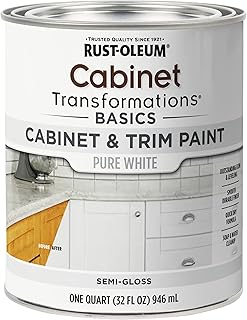
This quart of Pure White semi-gloss paint is best for buyers looking for a product specifically described for cabinets, vanities, furniture, and trim. The features emphasize smooth flow and leveling, with application options including a brush, roller, pad applicator, or airless sprayer.
The stated finish resists dirt, grime, and mildew on the paint film and is described as standing up to household chemicals. Those details make it a useful comparison for frequently handled household surfaces. However, the supplied product information does not identify the formula as water-based. Verify the product label if a water-based formula is essential, and do not rely on the product name alone to determine paint chemistry.
Rust-Oleum Advanced Dry Door And Trim Paint

This water-based satin black paint is best for buyers painting cabinet-adjacent doors or trim and wanting a coordinated dark finish. Its listed surfaces include interior or exterior metal, wood, and fiberglass. A ready-to-use, pre-mixed formula can also be convenient when you want paint prepared for application without mixing.
The product information says it dries to the touch in 45 minutes and emits less odor than oil-based paint. It is formulated to withstand fading. This is a door-and-trim product, not a paint specifically labeled for cabinets, so choose it for cabinet surfaces only after checking the container’s directions for the intended surface and preparation.
Rust-Oleum Painter’s Touch Latex Paint

Painter’s Touch is best for buyers who need a versatile water-based acrylic latex paint for a range of project surfaces. The listing names wood, metal, plaster, masonry, and unglazed ceramic, and describes a semi-gloss white finish. It is not marketed specifically as cabinet paint, so compare its label directions with your cabinet material and existing finish before choosing it.
- The formula is described as low odor and resistant to chips.
- It covers up to 120 square feet, according to the product details.
- The stated touch-dry time is 30 minutes.
Coverage and drying can vary with application and surface conditions. Choose this option for a multi-surface project where its listed finish and use directions fit; avoid treating its broad surface list as proof that every cabinet coating is compatible.
Buying Guide: How To Choose Water-Based Cabinet Paint
Is the paint actually water-based?
Check the product description and container label for the formula. In this selection, DWIL, Jungarian, Rust-Oleum Advanced Dry Door & Trim, and Painter’s Touch are identified as water-based or water-based acrylic products. The supplied details for Rust-Oleum Cabinet Transformations do not state its base, so verify before buying if that is a requirement.
What finish and color suit the room?
Match the finish to your design and existing surfaces. The options here include semi-gloss white, matte Crow Black Blue, satin black, and Pure White semi-gloss. A product labeled for trim may coordinate with cabinets, but its listed use and directions still matter when painting cabinet doors or frames.
How much paint will the project need?
Measure the cabinet area and use stated coverage only as an estimate. DWIL lists up to 80 square feet per 16-ounce kit, while Painter’s Touch lists up to 120 square feet. Jungarian’s supplied details do not give coverage. Surface texture, color change, coat count, and application method can affect the amount required.
Do you need primer or a topcoat?
Follow the paint maker’s preparation instructions for the specific surface. DWIL says primer and topcoat are not required on properly prepared surfaces, and Jungarian advertises application without sanding or primer. These claims do not establish that every cabinet surface can be painted without preparation; clean and prepare according to the product label.
Should dry time or odor affect your choice?
For an indoor project, compare the stated odor and drying details. Several products are described as low odor, and Rust-Oleum Advanced Dry lists a 45-minute touch-dry time. Touch-dry does not necessarily mean fully cured or ready for heavy use, so consult the label for recoat and use timing.
Frequently Asked Questions
What is the best water-based paint in this list for a small vanity?
DWIL is a direct match for a small vanity project: it is water-based, is intended for vanities, and lists up to 80 square feet of coverage per 16-ounce kit.
Which option is specifically intended for cabinets?
DWIL and Rust-Oleum Cabinet Transformations both list cabinets among their intended uses. DWIL is identified as water-based; the supplied details do not specify the base for Rust-Oleum Cabinet Transformations.
Can I use door and trim paint on cabinets?
Rust-Oleum Advanced Dry is listed for doors and trim, not specifically cabinets. Check its label for cabinet-surface suitability before applying it to cabinet doors or frames.
Does touch-dry time mean the cabinets are ready to use?
No. Touch-dry time describes when a surface is dry to the touch, not necessarily when the paint is fully cured. Follow the product directions for recoating and returning painted cabinets to use.
Do all cabinet paints require sanding?
Not necessarily, but requirements depend on the product and surface. Some listings advertise application without sanding, while preparation instructions vary. Follow the label rather than assuming that every existing finish is ready for paint.