If you’re choosing a wall air conditioner, you’re likely seeking a space-saving cooling solution that installs through a wall rather than a window. This guide highlights five solid options best suited for bedrooms, living rooms, apartments, and small offices. Each product is evaluated for efficiency, cooling capacity, and installation considerations to help you pick the right unit for your space and climate.
Summary table of selected products:
| Product | Best For | Notes |
|---|---|---|
| LG 10,000 BTU Through the Wall | Medium to large rooms up to 440 sq ft | Efficient R-32 refrigerant; multiple modes |
| LG 7,800 BTU Through the Wall | Bedrooms or small offices up to 330 sq ft | Wall installation; requires appropriate sleeve |
| LG 11,800 BTU Through the Wall | Larger living spaces up to 530 sq ft | Higher capacity; 4-way deflection |
| Mini Split Air-Conditioner – Ductless (Generic) | No-vent, no-window cooling | No venting required; modern aesthetic |
| Split Mini Portable Air Conditioner (Generic) | No-vent, wall-mounted option for renters | No permanent installation required; compact |
LG 10,000 BTU Through the Wall Air Conditioner

This wall unit uses R-32 refrigerant with an energy efficiency ratio (EER) of 10.7, offering efficient cooling for rooms up to 440 square feet. It supports three cooling speeds and three modes, including an Energy Saver option to circulate air without running the compressor. Best for: medium-sized living rooms or larger bedrooms where through-the-wall cooling is preferred. Limitation: installation requires a proper wall sleeve arrangement and venting; not ideal for standard window venting.
LG 7,800 BTU Through the Wall Air Conditioner

This 8,000 BTU-class unit is designed for through-the-wall installation and cools spaces up to 330 square feet. It also uses R-32 refrigerant with an EER around 10.7 and includes a dry mode that removes moisture. Best for: bedrooms or small offices where wall installation is feasible and space is limited. Limitation: requires a wall sleeve of 24.5 to 27 inches in width; not suitable for standard window venting.
LG 11,800 BTU Through the Wall Air Conditioner
This higher-capacity wall unit cools rooms up to 530 square feet and uses R-32 refrigerant with an EER of about 10.6. It features three cooling speeds and three modes plus a 4-way air deflection system for enhanced distribution. Best for: larger living rooms or open-plan spaces where powerful, through-the-wall cooling is advantageous. Limitation: installation requires appropriate wall sleeves and proper venting, which may limit placement options in some homes.
Split Mini Portable Air Conditioner – No Vent Portable

This no-vent portable mini split offers ductless cooling with no window venting and a wall-mounted option. Best for: renters or spaces where permanent installation isn’t possible. It provides a rapid perceived cooling effect and quiet operation, making it suitable for bedrooms or study areas. Limitation: some environments may require a more robust solution for larger spaces or higher humidity.
Portable Wall-Mounted Tower/No-Vent AC (Generic)
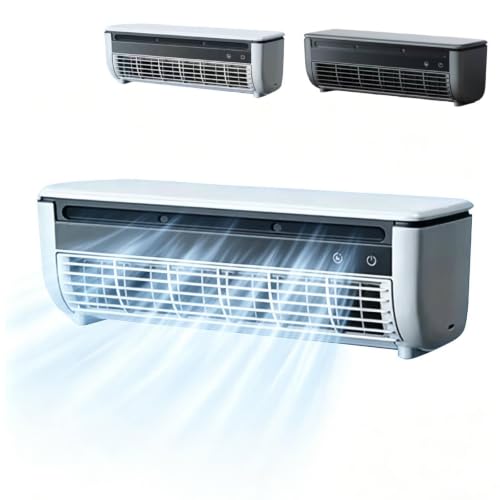
This ventless cooling solution emphasizes energy efficiency with a wall-mounted design that reduces humidity and quickly drops temperatures by around 13°C. Best for: small kitchens, bedrooms, or studios where a traditional window unit isn’t viable. Limitation: ventless systems may deliver less cooling capacity in very hot climates compared with larger, vented wall units.
Buying Guide
- Through-the-wall vs. no-vent systems: Through-the-wall units require a wall sleeve and proper venting but typically deliver higher cooling capacity. No-vent or ventless options are renter-friendly and easier to install but may have limited cooling power for larger spaces.
- Room size and BTU matching: Match BTU rating to room square footage. Higher BTUs suit larger rooms; too many BTUs can waste energy and cost more to run.
- Energy efficiency: Look for R-32 refrigerant and EER values. Higher EER means better efficiency and lower operating costs.
- Installation considerations: Check sleeve width requirements and whether professional installation is recommended. Consider whether permanent modifications align with your living situation.
- Features to value: Energy Saver modes, dry/moisture removal, 4-way deflection, remote control, and programmable modes improve comfort and ease of use.
- Noise level and comfort: Quiet operation is important for bedrooms and study spaces. Consider motor design and airflow direction for even distribution.
- Maintenance and durability: Regular filter cleaning and ease of service impact long-term performance. Look for accessible filters and warranty terms if available.
FAQ
What is the difference between through-the-wall and no-vent wall units?
Through-the-wall units are installed directly in a wall with a proper sleeve and venting, typically offering higher cooling capacity. No-vent or ventless options do not require window or venting, making installation simpler but often with lower maximum cooling power.
Which unit is best for a small apartment bedroom?
A compact, 7,800 BTU through-the-wall unit or a ventless mini-split option can efficiently cool a small bedroom, depending on climate and insulation.
Do these units require professional installation?
Most through-the-wall models benefit from professional installation to ensure proper venting and sleeve fit. No-vent models are typically easier to install for renters.
What maintenance is needed for wall A/C units?
Regular filter cleaning, checking for airflow obstructions, and ensuring the exterior vents remain clear help sustain efficiency and cooling performance.
Can a wall unit cool a larger living room effectively?
Yes, but you should select a higher BTU model (such as 11,800 BTU) and ensure the space is well insulated to maximize efficiency and comfort.