If you need on-demand hot water at or near your sink, an under-sink or point-of-use hot water heater can be the right choice. This guide highlights five compact options, explains who they suit best, and shows how to compare features like wattage, temperature controls, and safety protections. The focus is on units that save space, reduce wait time, and fit typical kitchen, bathroom, or RV setups. A quick summary table below helps you compare essentials at a glance.
| Product | Power | Best For | Key Benefit |
|---|---|---|---|
| 110V Tankless Water Heater Electric | 3000W | Apartments, kitchens, bathrooms with space limits | Instant hot water, compact wall-mount design |
| Electric Mini Tank Water Heater UL Listed (ES250) | 1440W | Point-of-use under sinks, quick hot water | Fast recovery, corrosion-resistant interior |
| GE 2.5 Gallon Mini Tank | Not stated (standalone unit) | Versatile small spaces, standalone or booster | Easy installation, hot water booster option |
| Mini Tankless Under Sink 3kW | 3000W | Compact setups needing precise control | LED display, safety protections, IPX4 |
| 120V 1500W Small Under Sink Tank | 1500W | RVs, trailers, compact kitchens | Rapid heating, durable stainless components |
110V Tankless Water Heater Electric
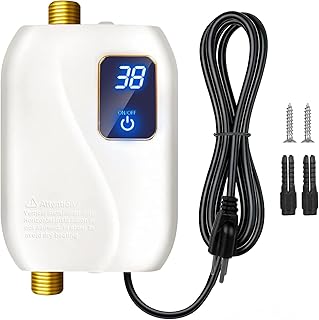
Best for: small apartments or kitchens where space is at a premium and you want on-demand hot water without a bulky tank. This 110-volt model delivers quick warm water with a compact, wall-mount design. It uses 3000W of power and can raise water by about 82°F at 0.3 GPM or 131°F at 0.5 GPM, depending on flow. A digital LCD display makes temperature and status easy to monitor. Pick this if you need a simple, space-efficient solution with immediate heat on demand.
Why selected: The unit emphasizes speed and space efficiency. Its 98% thermal efficiency supports energy savings, and the IPX4 rating provides basic protection for damp environments. The adjustable Fahrenheit/Celsius display adds flexibility for varying water sources. It also includes safety protections like leakage and overheat prevention.
Cautions: Ensure electrical access and proper mounting in accordance with local codes. With higher flow demands or long hot-water runs, you may notice slower warm-up or reduced temperature rise. Not ideal for high-temperature shower use from a compact under-sink location.
Electric Mini Tank Water Heater UL Listed (ES250)

Best for: point-of-use installations where you want a small storage-backed option with fast recovery. This 2.5-gallon unit provides instant hot water on demand with 1440W at 120V, and a temperature range from 50°F to 149°F. It uses a three-layer tank with enamel lining to resist corrosion and scale, paired with an Incoloy 800 heating element for durability.
Why selected: The combination of a robust interior coating and a high-efficiency heating element supports longer life and consistent performance in tight spaces. The insulation layer helps keep hot water warmer for longer, reducing standby losses compared with larger tanks.
Cautions: This model is best suited for limited-use scenarios (single tap at a time). If your hot-water demand includes running multiple taps, consider alternatives with higher wattage or a larger capacity to avoid temperature drops.
GE Appliances 2.5 Gallon Mini Tank

Best for: spaces that require flexible placement and straightforward installation. The GE mini tank can be installed under a sink or used as a booster when pipe runs extend far from a central heater. It supports standard 1/2-inch NPT connections for easy wall or floor mounting and can function as a standalone unit or inline with another heater to boost long pipe runs.
Why selected: Its compact design and easy installation appeal to homeowners and RV travelers who want a reliable, space-saving hot-water option. The booster capability helps extend hot water to distant fixtures, reducing wait times along lengthy plumbing runs.
Cautions: Some users may require a separate power supply or professional installation depending on local electrical codes. As a standalone heater, overall output is limited by its capacity, so plan flows accordingly for simultaneous taps.
Mini Tankless Instant Water Heater Under Sink (3kW)

Best for: precise control in tight spaces where a compact, high-output unit is desired. This 3kW, 120V model uses LED display and a control knob to set temperatures, with IPX4 waterproofing and multiple safety features including dry heating protection and overheat protection.
Why selected: The LED display and single-control knob simplify use, making it straightforward to set temperatures between 30°C and 55°C. Its safety protections and compact footprint are well-suited to under-sink installations in kitchens or bathrooms where space is at a premium.
Cautions: This unit is designed for low-flow scenarios. It is not recommended for showers or multiple simultaneous taps. Consider higher wattage (e.g., 6kW) if you need more headroom for larger loads.
120V 1500W Small Under Sink Tank

Best for: mobile setups like RVs, food trucks, or compact kitchens where space is extremely limited. This 2.6-gallon unit heats quickly and includes stainless steel components for durability in mobile environments.
Why selected: The combination of stainless steel construction and compact design makes it a practical choice for travelers or small businesses needing reliable hot water at a single under-sink point. The 316 stainless steel heating element helps with durability and corrosion resistance in varied water conditions.
Cautions: It is important to avoid demanding simultaneous taps. For higher flow or multiple outlets, a larger model or alternative heating arrangement may be necessary to maintain consistent temperatures.
Buying Guide
What matters most when choosing an under-sink hot water heater?
- Flow rate and temperature rise: Match wattage to your desired GPM at your inlet water temperature. Higher wattage yields faster heating but requires appropriate electrical capacity.
- Power source and installation: Decide between 110V/120V plug-in units or hard-wired models. Consider space for mounting and whether a nearby outlet or space supports wiring to code.
- Tank vs tankless: Tankless models save space and provide instant heat on demand, while small tanks offer a buffer and simple storage for quick taps.
- Safety features: Look for overheating protection, leakage protection, dry-boil protection, IP rating, and automatic shutoff for added safety in wet areas.
- Durability and materials: Enamel-coated interiors and corrosion-resistant heating elements extend life in acidic or mineral-heavy water conditions.
- Installation location: Ensure you have accessible plumbing connections, electrical access, and room for maintenance or service needs.
- Maintenance needs: Some units have easier access for flushing and cleaning; check whether the design promotes easy routine maintenance.
Practical tips for configuration
- Place the heater close to the sink to minimize hot-water wait time and reduce wasted water.
- Use a booster or inline setup if hot water must travel long pipe runs to distant fixtures.
- Pair a compact unit with an efficient faucet aerator to optimize perceived hot-water performance.
FAQ
- Can I install an under-sink water heater myself?
– Yes, for many plug-in or simple configurations. For hard-wired units or complex plumbing, consult a licensed professional to meet local codes. - What is the typical temperature rise I can expect from these units?
– Temperature rise depends on flow rate and incoming water temperature; higher wattage generally yields faster heating and higher rise at a given flow. - Are under-sink heaters safe around kitchens and bathrooms?
– Most models include water and electricity isolation, leak protection, and overheating safeguards designed for damp environments when installed correctly. - What’s the difference between tankless and mini-tank options?
– Tankless provides on-demand heating with no standby loss, while mini-tanks offer a short buffer and easier initial setup. - Which unit is best for RVs or mobile setups?
– Smaller capacities with robust safety features and compact form factors, designed for mobility and limited spaces, are ideal. - Do these units require ongoing maintenance?
– Regular inspection of connections and flushing if mineral buildup appears helps maintain performance; always follow manufacturer guidance.