The best smart sump pump monitor depends on what you need to detect: pump problems, rising water, leaks, or power loss. A plug-in monitor without water-level sensors is suited to homeowners who want pump-operation alerts, while a sensor-based alarm can warn when water reaches a set level. The options below cover remote notifications, local alarms, and broader basement monitoring. Check each device’s monitoring method and alert features before choosing, since these products do not all detect the same conditions.
| Product | Best suited for | Monitoring approach |
|---|---|---|
| WiFi Sump Pump Monitor & Protector | Pump-operation alerts without pit access | Plug-in monitoring, no sensors |
| Moen Smart Sump Pump Monitor | Multiple alert methods | Water-security monitoring |
| Briidea Smart WiFi Sump Pump Alarm | High-water alerts and a loud local alarm | Water-level alarm |
| Sump Pump Monitor & Alarm | Remote pump and power alerts | Wi-Fi plug monitoring, no water sensors |
| Level Sense Pro Wi-Fi Alarm | Monitoring several basement conditions | Float switch and additional sensors |
WiFi Sump Pump Monitor & Protector

Best for: Homeowners who want alerts about pump behavior without installing a water-level sensor or accessing the sump pit. The device plugs in, connects to Wi-Fi, and auto-calibrates, according to the product details.
Its listed alerts cover dry runs, overloads, power loss, and unusually short or long cycles. The product also describes AI-generated recommendations based on historical pump behavior, plus remote control and overload protection. It states that no login, password, or subscription is required.
Limitation: This model does not use water-level sensors. Choose a sensor-based alarm instead if direct high-water detection is a priority.
Moen Smart Sump Pump Monitor

Best for: Buyers who value several ways to receive notifications. The Moen monitor provides proactive monitoring and can alert users through the Moen Smart Water app, text, email, or phone call; the device can also sound an audible alarm.
The product is intended to add water security in an area that may not already be monitored. It is a reasonable choice when receiving alerts through more than one channel is important, including when a phone notification alone may not be enough.
Limitation: The supplied product details do not specify particular pump-fault alerts such as dry runs or overloads. Compare its detection capabilities with a pump-operation monitor if those alerts are essential.
Briidea Smart WiFi Sump Pump Alarm

Best for: Homeowners who want a high-water alarm with both remote and on-site alerts. The device sends abnormal water-level notifications through the GeniLife app and has a built-in 110-decibel buzzer and bright LED indicator.
Its IP67 waterproof rating is listed as a feature, and the manufacturer positions the alarm for indoor or outdoor use, including basements and gardens. It is better suited to water-level warnings than to diagnosing pump electrical or cycling behavior.
Limitation: The listed features focus on abnormal water levels; they do not identify specific pump faults such as overloads or dry runs.
Sump Pump Monitor & Alarm

Best for: Buyers seeking a Wi-Fi plug-style monitor with remote management and alerts for pump and power issues. The product lists notifications for power outages and pump failures, with the aim of helping homeowners respond before a basement floods.
It also describes alerts for problems such as stuck float switches or blockages, which may help users identify unnecessary pump operation. The slim pigtail design is intended to leave the second outlet available.
Limitation: This model is described as having no water-level sensors. Choose a separate water-level alarm if you need a direct warning that water has risen to a particular point.
Level Sense Pro Wi-Fi Sump Pump Alarm
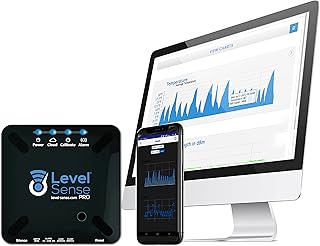
Best for: Homeowners who want broader basement monitoring in addition to sump water-level alerts. Listed features include a float switch, water-level monitoring, leak detection, temperature and humidity sensing, and power-failure alerts.
The product also describes cloud check-ins and an internal auto-recharging backup battery. Improved Wi-Fi reconnection is listed as a feature, making this option worth considering when monitoring several environmental conditions is more useful than focusing only on pump cycles.
Limitation: This monitor uses a float switch and additional sensors, so it is not the sensor-free, no-pit-access option described by some plug-in monitors.
Buying Guide: How To Choose A Smart Sump Pump Monitor
Do you need pump-operation alerts or high-water detection?
These are different monitoring jobs. A plug-in monitor can track signs of pump behavior, such as cycling, overload, or power loss, depending on its features. A water-level alarm detects rising water through a sensor or float switch. If preventing unnoticed flooding is the main concern, prioritize a model that explicitly lists water-level detection. For pump troubleshooting, compare the listed operating alerts.
Will you install a sensor in the sump pit?
Sensor-free devices may appeal to buyers who want a simpler setup and do not want to access the pit. Sensor-based alarms can provide direct water-level monitoring but require the relevant sensor or float-switch arrangement. Confirm the installation requirements in the product instructions before buying, especially if access to the sump is difficult.
Which alerts matter most?
Look for the specific conditions you want to know about: high water, leaks, pump failure, dry runs, overload, power outage, or temperature changes. App notifications are useful when away from home, while an audible alarm and LED can help alert someone nearby. Do not assume a monitor detects a condition unless it appears in its listed features.
How should you compare Wi-Fi and backup features?
Smart alerts depend on the device’s connection and notification method. Compare stated reconnection features, available alert channels, and any listed backup power. A backup battery is not the same as backup power for the sump pump itself. These products should be evaluated as monitoring devices, not as replacements for a functioning pump or backup pumping system.
Frequently Asked Questions
Can a smart sump pump monitor prevent every flood?
No. A monitor can provide alerts about conditions it detects, but it cannot guarantee that flooding will be prevented or that every failure will be identified.
Do all smart sump pump monitors use water-level sensors?
No. Some listed models monitor pump behavior without water-level sensors, while other alarms use water-level sensing or a float switch.
Can these monitors alert me when the power goes out?
Some options in this list specifically include power-loss or power-failure alerts. Check the individual feature list rather than assuming every model offers this function.
Is Wi-Fi monitoring enough if no one is home?
Remote alerts can notify you away from home, but response depends on the device detecting the issue and delivering its notification. A local buzzer can provide an additional alert to people nearby.
Should I choose a sensor-free model or a float-switch model?
Choose sensor-free monitoring if you prioritize avoiding pit access and want the listed pump-operation alerts. Choose a float-switch or water-level model if direct water-level detection is more important.