Self-leveling vinyl flooring is not the same as self-leveling floor compound: vinyl planks and peel-and-stick flooring need a suitably flat surface, while patch products help correct small low spots. The DAP patch is best for filling and smoothing before installation; the SPC planks suit buyers seeking a rigid, waterproof floating floor; and the peel-and-stick roll is aimed at quick DIY updates. The transition strip and underlayment are accessories, not substitutes for leveling a floor.
| Product | Best suited for | Role |
|---|---|---|
| DAP Flexible Floor Patch and Leveler | Preparing small areas before flooring | Floor patch |
| Professional Grade Peel and Stick Floor Tile | Quick surface refreshes | Vinyl covering |
| Suntecwood SPC Click Lock Planks | Rigid-core floating floors | Vinyl flooring |
| Maxiroc Floor Transition Strip | Finishing doorway edges | Transition accessory |
| PolyFoam Foam Underlayment | Compatible laminate or wood floors | Underlayment |
DAP Flexible Floor Patch And Leveler

Best for: Filling and smoothing small floor imperfections before installing vinyl tile, sheet flooring, carpet, or other listed floor coverings. This 32-ounce latex-based filler is the most directly relevant product here for floor preparation.
DAP describes the formula as crack resistant and sandable to a feathered edge. It sets in six hours, according to the supplied product details. A feathered edge can help blend a repaired area into the surrounding surface, but this is a patch product rather than a pourable compound for leveling an entire room.
Limitation: The listed features do not specify coverage or suitability for correcting major height differences. Check the product directions and the flooring maker’s subfloor requirements before use.
Professional Grade Peel And Stick Floor Tile

Best for: DIY buyers who want a self-adhesive vinyl surface on a hard, flat floor. The product is listed as an 11.8-inch-by-118-inch roll with a decorative finish and backing that is removed before pressing the material into place.
Its listed features include a thickened vinyl construction, water and scratch resistance, and a textured surface. The seller also describes the adhesive as designed to bond to most hard, flat surfaces. It may suit a quick cosmetic update, but it is a floor covering—not a self-leveling product—and an uneven base can affect the finished appearance or adhesion.
Limitation: Confirm the surface is clean, flat, and appropriate for adhesive flooring before installation. The listing’s broad durability claims do not replace checking care and installation instructions.
Suntecwood SPC Click Lock Luxury Vinyl Planks

Best for: Buyers who want rigid-core, floating vinyl planks for indoor spaces. The listing identifies a 21.4-square-foot package, 5 mm thickness, walnut appearance, click-lock installation, and an SPC core. It says no glue is needed for installation.
The supplied features describe the flooring as waterproof and list a 0.3 mm wear layer tested over 15,000 abrasion cycles. An attached 1.0 mm IXPE underlay is also listed, along with sound-absorption and comfort benefits. These details make it a better fit than peel-and-stick material for shoppers seeking a plank-style floating floor.
Limitation: Click-lock flooring still requires a suitably flat subfloor; it does not level the floor beneath it. Check the manufacturer’s installation requirements, including subfloor tolerances, before purchase.
Maxiroc Self-Adhesive Floor Transition Strip
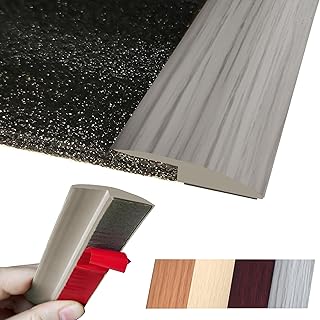
Best for: Finishing a doorway or floor edge where a transition cover is needed. The listed gray forest strip is 40 inches long and is described for carpet, wood, tile, vinyl, and laminate transitions. Its stated use includes gaps and uneven floors with height differences within 5 mm.
This is an accessory for covering an edge or transition after flooring installation, not a way to flatten a broad floor area. Choose it if you need a self-adhesive trim piece for a compatible threshold situation.
Limitation: The stated height range is limited to differences within 5 mm. Measure the doorway and check the material and color against the adjoining floors.
PolyFoam Multipurpose Foam Underlayment

Best for: Shoppers selecting underlayment for a compatible laminate or wood flooring installation. The supplied listing describes a 100-square-foot roll that is lightweight, moisture resistant, shock absorbing, and easy to install.
This product is included as a comparison point because underlayment can be part of a flooring system, but the listing names laminate and wood floors rather than vinyl. It should not be assumed suitable beneath vinyl planks or peel-and-stick flooring unless the flooring manufacturer allows it.
Limitation: Foam underlayment is not a floor-leveling compound and will not correct an uneven subfloor. Verify compatibility before using it with vinyl flooring.
Buying Guide: Choosing Vinyl Flooring And Floor Prep
Do you need a leveling product or a vinyl covering?
First identify the problem. For small low spots or surface imperfections, a patch such as the DAP product may be appropriate when its directions match the subfloor and floor covering. For a complete flooring update, choose a vinyl covering such as peel-and-stick material or click-lock planks. Neither covering should be treated as a solution for an uneven base.
Which vinyl installation style fits your project?
Peel-and-stick vinyl is designed to adhere directly to a suitable hard, flat surface. SPC click-lock planks connect as a floating floor and are listed with a rigid core and attached underlay. Compare the required preparation, installation instructions, room conditions, and package coverage before deciding. Do not add separate underlayment unless the flooring instructions permit it.
What should you check before buying?
- Measure the floor area and compare it with the stated package coverage.
- Inspect the subfloor for uneven areas and follow the chosen flooring’s flatness requirements.
- Confirm the product is intended for the surface and room where it will be installed.
- For accessories, measure transition heights and doorway widths before selecting a trim strip.
Frequently Asked Questions
Is self-leveling vinyl flooring a type of floor compound?
No. Vinyl flooring is the finished surface material. Self-leveling or patch compounds are used to prepare a subfloor; they are not vinyl flooring.
Can click-lock vinyl planks hide an uneven floor?
They should not be relied on to correct unevenness. Prepare the subfloor to the flooring manufacturer’s requirements to help the planks sit and connect properly.
Can foam underlayment level a floor?
No. Underlayment may provide cushioning or moisture-related features, depending on the product, but it does not correct uneven subfloors.
Is peel-and-stick vinyl suitable for a rough surface?
The listed roll is intended for hard, flat surfaces. Prepare the surface as directed, since bumps or unevenness may affect the appearance and bond.
When is a transition strip useful?
A transition strip can cover an edge or doorway gap between flooring areas. The listed Maxiroc product specifies height differences within 5 mm, so measure the transition before choosing it.