Rustic wood tile flooring blends the warm look of real wood with durable, easy-care materials. This guide highlights five practical options that suit different spaces—from living areas to patios—so you can choose the best match for your needs. Each product is presented with who it’s best for, why it stands out, and a useful caution to consider before purchase.
Summary of chosen products (compact reference):
– Nexus Peel & Stick Vinyl Floor Tiles, Oak
– Hilarious Peel and Stick Vinyl Floor Tiles, Rustic Walnut
– Yun-aeon Rustic Oak Wood Texture Peel and Stick Planks
– THYOI Premium Deck Tiles, Acacia Wood
– FunStick Brown Wood Peel and Stick Floor Tile
Nexus Peel & Stick Oak Vinyl Tiles

Nexus Oak Peel & Stick tiles offer a simple, quick-install solution ideal for renters or budget-conscious remodels. The decorative tile format adds a dimensional texture that helps create a coordinated finish in small rooms or accent areas. Best for light-traffic spaces where you want a wood-look without professional installation.
Who it’s best for: apartment dwellers, DIY enthusiasts, and temporary living spaces. Why chosen: easy peel-and-stick installation, visible wood-like texture, and compact 12×12 inch tiles that blend well with many color schemes. Caution: adhesive performance can vary on high-gloss or very smooth surfaces; ensure the subfloor is clean and dry before applying.
Hilarious Rustic Walnut Peel & Stick Tiles

This rustic walnut option emphasizes deeper wood tones and a rich grain pattern that elevates cozy living spaces. The 36-piece set provides broader coverage for medium rooms and small-to-mid-sized renovations without specialized tools. Best for living rooms or kitchens where a more pronounced wood character is desired.
Who it’s best for: homeowners pursuing a warm, traditional wood aesthetic on a budget. Why chosen: larger tile count speeds up installation and delivers consistent grain visuals. Caution: the product line may include variations in plank thickness or tone between batches; consider mixing tiles from the same batch for uniformity.
Yun-aeon Rustic Oak Plank Peel & Stick
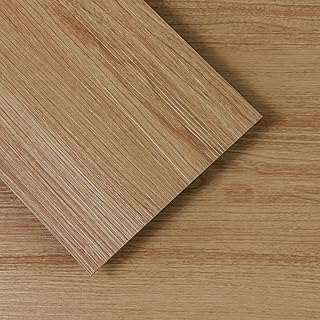
Yun-aeon’s rustic oak planks blend a classic wood grain with a peel-and-stick format, covering up to 18 square feet per pack. This option is well-suited for bedrooms or hallways where a softer, wood-inspired look is preferred. Best for light to moderate foot traffic areas and users who want a plank-style appearance.
Who it’s best for: individuals seeking a classic oak appearance with straightforward installation. Why chosen: plank design can mimic authentic hardwood layouts, offering flexible patterns. Caution: check for color consistency across multiple packs to avoid noticeable shade differences in larger rooms.
THYOI Premium Deck Tiles in Acacia Wood
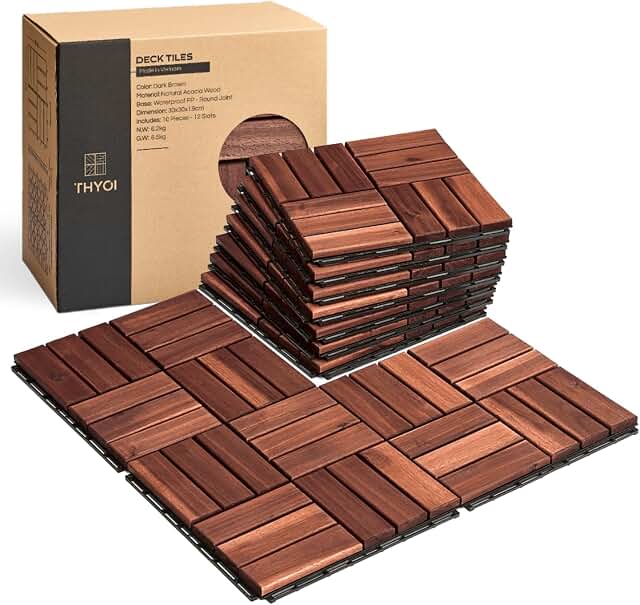
THYOI deck tiles are premium outdoor-friendly options crafted from 100% natural acacia wood with a deep-oil finish. These interlocking tiles are designed for patios, balconies, and pool surrounds. Best for outdoor spaces where a durable, water-resistant surface is needed and a classic wood aesthetic matters.
Who it’s best for: homeowners extending rustic wood visuals to outdoor living areas. Why chosen: elevated quick-drain base and snap-lock connectors facilitate airflow and moisture management, helping keep surfaces drier. Caution: suitable for outdoor use, but ensure proper drainage and maintenance for longevity in extreme weather regions.
FunStick Brown Wood Peel & Stick Tiles

FunStick offers a removable, waterproof option with a brown wood look, suitable for kitchens and bathrooms where moisture is a concern. The 12×12 inch tiles are convenient for quick updates in spaces that require a compact, stylish flooring solution without renovation downtime.
Who it’s best for: renters or homes needing temporary style updates with strong water resistance. Why chosen: water resistance and removable design provide flexibility. Caution: adhesive strength may diminish on very textured or uneven subfloors; prep the surface thoroughly for best results.
Buying Guide
What to consider when choosing rustic wood tile flooring:
- Room type and traffic: High-traffic areas benefit from more durable vinyl or deck tiles; lighter rooms can use decorative vinyl planks for the appearance of real wood.
- Surface compatibility: Peel-and-stick formats perform best on clean, smooth subfloors. Some products require a cement or plywood base for optimal adhesion.
- Moisture and humidity: Water-resistant vinyl tiles and outdoor acacia deck tiles are preferable in bathrooms, kitchens, and patios.
- Aesthetic details: Plank patterns yield a hardwood look, while dimensional tile formats add textured depth for small spaces.
- Installation method: Peel-and-stick is simplest for DIY projects; interlocking deck tiles offer fast outdoor installation and drainage.
- Color and tone consistency: Order extra tiles from the same batch when possible to minimize shade variation across large areas.
Practical tips for installation
- Prepare the subfloor: clean, dry, and level surfaces improve adhesive performance and longevity.
- Cutting and fitting: use a sharp utility knife and straight edge for clean cuts, especially around corners or fixtures.
- Acclimation: allow tiles to acclimate to the room’s conditions before installation if recommended by the manufacturer.
- Maintenance: follow manufacturer guidelines for cleaning products to preserve texture and color over time.
FAQ
- What is the best option for a quick kitchen update?
– Peel-and-stick vinyl tiles typically offer fast installation with a wood-like appearance and moisture resistance suitable for kitchens. - Are rustic wood tiles suitable for outdoor use?
– Outdoor-grade deck tiles, especially acacia wood with a drainage base, are designed for patios and balconies and handle weather better. - Can these tiles be installed over existing flooring?
– Many peel-and-stick tiles can be applied over existing smooth, clean surfaces; irregular or textured subfloors may require surface preparation or alternative products. - How important is color consistency across packs?
– Very important for large areas; mixing packs from different batches can create noticeable shade differences. - Do these tiles require special tools?
– Most peel-and-stick options need only a utility knife and measuring tools; deck tiles use interlocking mechanisms that require no glue. - What maintenance is required?
– Use manufacturer-recommended cleaners and avoid harsh solvents that could degrade the surface or adhesive over time.