Discover durable, easy-to-install rubber weight room flooring options that protect floors, reduce noise, and support heavy workouts. This guide features five top interlocking rubber flooring products suited for home gyms, each chosen for durability, ease of use, and value. Ideal buyers: weight lifters needing stable mats, small garage gyms, and multi-use workout spaces. The following table summarizes the selections to help you compare at a glance.
| Product | Best For | Notes |
|---|---|---|
| American Floor Mats Fit-Lock 3/8″ Heavy Duty Rubber Flooring | General home gym users | Interlocking tiles, grey tone |
| AIRHOP 0.56in Thick 48 Sq Ft Mats | Heavy equipment and high-traffic workouts | High-density EVA foam base with rubber top |
| AIRHOP 1″ Ultra-Thick 48 Sq Ft Gym Flooring | Garage gyms with heavy weights | Interlocking puzzle mats |
| PRAISUN 0.6″ Thick Rubber Top Gym Flooring | Budget-conscious home gyms | Interlocking mats |
| SUPERJARE 0.56″ Thick 48 Sq Ft Gym Flooring | Quiet, cushioned workouts | Dual-layer EVA foam with rubber top |
American Floor Mats Fit-Lock 3/8 Inch Heavy Duty Rubber Flooring
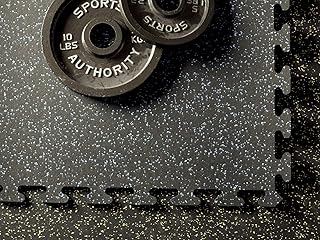
Best for general home gyms needing reliable interlocking tiles with a neutral look and solid durability. These 4 tiles create a 4′ x 4′ surface that offers steady footing for free weights and cardio equipment. The 3/8 inch thickness balances impact absorption with stability for most home setups.
AIRHOP 0.56in Thick 48 Sq Ft Mats

Best for heavy equipment and high-traffic workouts. This AIRHOP tile setup combines a dense EVA foam base with a robust rubber top, offering strong support for weights and machines while reducing vibration. Choose this if you need reliable durability under frequent loading and unloading of gear. A minor drawback is the interlocking edges can be more challenging to align for very small spaces.
AIRHOP 1″ Ultra-Thick 48 Sq Ft Mats

Better for garages with heavy weights, this option provides a true thick rubber top and poly foam base for robust impact protection. The interlocking design helps create a seamless surface across a larger area. Consider this if you want superior weight-bearing performance with improved noise reduction, but be aware of possible additional setup time and weight to transport.
PRAISUN 0.6″ Thicker Rubber Top

Best for budget-minded buyers who still want interlocking mats with a rubber top. PRAISUN offers a 0.6″ thickness, delivering reasonable protection for common garage gym weights and workouts while keeping setup simple. Choose this if you want cost efficiency without sacrificing core functionality. The limitation is that very heavy machines may perform better on thicker options.
SUPERJARE 0.56″ Thick Gym Flooring

Best for quiet, cushioned workouts with good shock absorption. The SUPERJARE design layers a high-density EVA foam base under a rubber top to reduce noise and vibrations during lifts and sprints. This can be ideal for second-floor gyms or shared spaces. A caveat is that the foam layer may require careful placement to avoid edge gaps if tiles aren’t perfectly aligned.
Buying Guide: Rubber Flooring For Weight Rooms
What thickness do you need?
Thicker floors (0.6″–1″) offer more impact protection and weight-bearing capacity. They’re better for heavy dumbbells, barbells, and dropping weight. Thinner options are lighter and easier to install but offer less shock absorption.
Interlocking vs. loose tiles
Interlocking tiles create a seamless surface and are typically easier to install in rectangular or irregular spaces. Loose tiles may be easier to replace individually but can reveal gaps if not perfectly aligned.
Durability and odor
Look for products with a rubber top or dual-layer construction for longevity. Some mats reduce odor with upgraded materials. For apartments or shared walls, choose mats with quieting properties to minimize noise transfer.
Footing and traction
Choose a surface with a textured rubber top for better grip during lifts and movements. A good surface reduces slipping risks during sweat-heavy workouts or dynamic drills.
Floor protection vs. gym layout
Consider your space: thicker mats protect subfloors during heavy lifts but take up more room. If you have a small garage, plan the layout to avoid obstructing doors or racking systems.
Maintenance and care
Regular cleaning with mild soap and water keeps mats in good condition. Avoid harsh chemicals that may degrade rubber or foam layers over time.
FAQ
- What is the best rubber flooring for a weight room on a budget? Look for mats with a rubber top and EVA foam base in the 0.56″ to 0.6″ range. They offer essential weight support and shock absorption at a lower cost.
- Are interlocking mats better than fixed tiles? Interlocking mats are easier to install and replace. They also allow flexible layout changes as your gym grows or changes.
- Do these mats reduce noise from heavy lifting? Yes, many models include foam layers that dampen impact and vibrations, reducing noise transmission to adjacent rooms.
- How thick should gym flooring be for heavy lifting? For dropped or heavy equipment, 0.6″ to 1″ thick flooring provides stronger protection and stability.
- Can I install rubber flooring on uneven concrete? Most interlocking mats can bridge minor irregularities, but severely uneven surfaces may require subfloor preparation or a leveling solution.
- How long do rubber foam top mats last? Durability depends on usage, weight loads, and care. High-density EVA foam tops with a rubber layer tend to last longer under heavy equipment.