Answer: Roll-type R-13 insulation is best for standard 2×4 exterior walls and interior retrofit projects where a lightweight, easy-to-handle material is needed. This article compares five practical options, highlighting who each product suits, why it was selected, and any notable limitations. The focus is on fiberglass, reflective foil, and foam-core rolls that support temperature control and noise reduction without requiring specialized installation know-how.
The following quick-reference table summarizes key details for the five top picks. Use this to compare suitability at a glance.
| Product | Best For | Notes |
|---|---|---|
| Owens Corning R-13 Pink Kraft Faced | Budget projects, 2×4 walls | Soft, formaldehyde-free; traditional fiberglass roll |
| SmartSHIELD Reflective 5mm Roll (48″ x 50ft) | Radiant barrier + insulation combo | One-layer solution; high reflectivity |
| USA Reflective Insulation Bubble Roll | Colder climates, quick radiant wrap | Bubble layer adds cushioning |
| VEVOR Double Reflective Insulation Roll | Windows, roofs, RVs; year-round control | Three-in-one design: barrier, insulation, vapor control |
| SmartSHIELD 24″ x 50ft R17 Roll | Compact spaces needing higher R | Foil/foil configuration; strong radiant barrier |
Owens Corning R-13 Pink Kraft Faced Fiberglass Insulation Roll

This roll features R-13 faced insulation designed for easy exterior and interior installation in 2×4 walls. The fiberglass material helps maintain temperatures and reduces noise transmission in shared spaces. The pink fiberglass is noted as formaldehyde-free and soft to the touch, which can ease handling during installation.
Best for: Budget-friendly 2×4 wall projects where conventional insulation is preferred. Caution: Faced products can require careful cutting around outlets and wires to preserve vapor barrier integrity.
SmartSHIELD -5mm Reflective Foam Core Roll (48″ x 50ft)

This product combines radiant barrier, insulation, and vapor/sound barrier in a single 5mm foam-core roll. It reflects up to 95% of radiant energy, achieving a high effective R-value with one layer. Best for radiant heat control in attics, crawlspaces, or walls where a slim profile is beneficial.
Best for: Projects needing a compact, all-in-one radiant barrier solution. Caution: May be less forgiving in irregular framing or areas needing thicker insulation layers.
USA Reflective Insulation Bubble Roll (48″ x 125′)
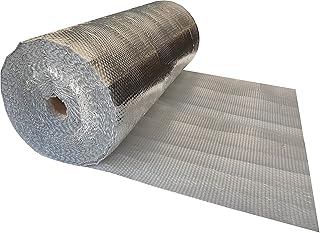
This one-sided reflective insulation includes a bubble layer, adding lightweight cushioning while delivering radiant barrier performance. It suits colder climates where quick radiant control helps reduce heating loads, and its wider roll length minimizes seams in larger projects.
Best for: Quick, weather-ready wrapping in colder regions. Caution: Bubble layers may complicate stapling on uneven surfaces; ensure proper seam sealing for vapor control.
VEVOR Double Reflective Insulation Roll (3.2 mm, 48″ x 50 ft)

This 3-in-1 design functions as a radiant barrier, insulation layer, and vapor barrier. The double reflective aluminum foil paired with a dense EPE foam core offers strong heat reflection, making it a versatile option for windows, roofs, or RVs where a compact, multi-purpose solution matters.
Best for: Installations needing combined barrier, insulation, and vapor control. Caution: Thicker assemblies may require additional framing or tape for airtight seals.
SmartSHIELD -5mm 24” x 50ft R17 Reflective Insulation Roll

This compact R17 roll uses a dual-foil configuration to maximize radiant heat control in tight spaces. It can be a better option where space is at a premium but higher effective insulation is still desired. It pairs well with other insulation layers in phased builds.
Best for: Small project zones needing higher R-value with excellent radiant protection. Caution: The narrower 24″ width may require more seams in larger walls, potentially increasing installation time.
Buying Guide: Key Considerations For Rolling Insulation
What should you consider when choosing a roll of insulation? Start with climate, wall type, and installation ease. Roll insulation can come as fiberglass, reflective foil, or foam-core products; each has strengths and limitations in terms of R-value, vapor control, and moisture management.
- Climate suitability: Reflective foils excel in hot, sunny environments by reducing radiant heat; fiberglass works well for standard temperature moderation.
- Wall feasibility: 2×4 walls are common for remodels; ensure the roll width and thickness fit available framing and space for batts or takes in around outlets.
- Vapor barrier needs: Some products include built-in vapor barriers; others require separate sealing to prevent moisture migration.
- Air sealing and installation: Properly sealing seams and penetrations improves overall energy performance; consider supplementary caulking or tape where necessary.
- Durability and handling: Fiberglass can be more brittle at edges; reflective foils are lighter and easier to cut in tight spots but may require careful seam management.
How To Choose By Scenario
- New construction or major remodels: A combined barrier-insulation option like the 3-in-1 VEVOR roll can simplify assembly.
- Budget-conscious 2×4 walls: Owens Corning R-13 Pink Kraft faced insulation provides familiar performance at a lower price point.
- Radiant-heat-heavy climates: Reflective foil options, particularly those with high radiant reflectivity, offer notable energy savings with thin profiles.
- Spaces with limited depth or access: Narrow rolls like the 24″ x 50ft option can fit in tight cavities, though you may need more seams to cover the area.
- Moisture-prone areas: Prioritize products with vapor barrier capabilities or the option to add a vapor seal to prevent condensation.
Frequently Asked Questions
- What is R-13 insulation best used for?
R-13 is commonly used in 2×4 wall assemblies to provide an effective balance of thermal resistance and ease of installation in standard homes.
- Do reflective foil insulations replace traditional fiberglass?
They can supplement or replace fiberglass in certain applications where radiant heat reduction is critical, but they often work best in combination with other insulation types for full coverage.
- Is faced insulation better than unfaced for walls?
Faced insulation includes a paper or foil vapor barrier, which helps control moisture; unfaced insulation requires a separate vapor barrier installation in many climates.
- Can I mix insulation types in the same project?
Yes, but ensure proper installation and moisture control in each area; mixing can optimize performance in different zones of a building.
- How important is air sealing with roll insulation?
Air sealing is essential for maximizing insulation effectiveness by reducing infiltration and exfiltration around seams and edges.
- What should I consider for smaller spaces like attics or crawlspaces?
Look for roll insulation with a thinner profile and easy cutting to fit irregular shapes, while ensuring adequate coverage and vapor control.