The most useful remedies for bed bugs combine targeted treatment with monitoring: powders can treat cracks and crevices, while traps help detect activity. Harris Bed Bug Powder is best for applying dust in hard-to-reach areas, and EcoPest Bed Bug Killer Dust is an alternative powder formulated with pumice and plant-based oils. MaxGuard, Harris, and Raid traps are best for monitoring, not as stand-alone solutions for an established infestation.
| Product | Best suited for | Type |
|---|---|---|
| Harris Bed Bug Powder | Cracks and crevices | Diatomaceous earth dust |
| EcoPest Bed Bug Killer Dust | Plant-based dust treatment | Pumice powder |
| MaxGuard Bed Bug Traps | Monitoring several areas | Adhesive traps |
| Harris Bed Bug Traps | Discreet home monitoring | Foldable traps |
| Raid Bed Bug Detector and Trap | Home or travel detection | See-through trap |
Harris Bed Bug Powder

Harris HDE-8 is a diatomaceous earth powder intended for thorough treatment, including hard-to-reach spots. Its puffer tip is designed to apply dust into cracks and crevices or onto surfaces. The product information says insects that contact the powder will die within 48 hours of initial contact.
Best for: People who need a dust applicator for targeted locations such as gaps and crevices. It is selected for its stated application method and focus on hard-to-reach areas.
Limitation: The product works through insect contact, so it should not be treated as an instant solution or a substitute for monitoring. Follow the product label and avoid creating airborne dust.
EcoPest Bed Bug Killer Dust

This one-pound dust uses natural pumice powder infused with plant-based oils. The product description says laboratory testing found mortality among exposed adult bed bugs within four days and reported that eggs did not hatch under the test conditions. It is described as low-odor and non-staining, without synthetic chemicals, pyrethrin, or artificial fragrance.
Best for: Buyers looking for a dust treatment made with pumice and plant-based oils rather than diatomaceous earth. It was selected as a distinct alternative to the other powder in this list.
Limitation: Laboratory results do not guarantee the same result in every home. Apply only as directed on the label, and do not assume that “natural” means risk-free.
MaxGuard Bed Bug Traps

This 24-trap set uses a timed-release attractant and sticky adhesive to detect and trap bed bugs and other crawling insects. The product is described as non-toxic and insecticide-free. Its larger count can help buyers place monitors in multiple indoor locations and check for activity over time.
Best for: Households that want several traps for broad monitoring. It is selected for its pack size, attractant, and insecticide-free adhesive design.
Limitation: Traps detect or catch insects that reach them; they do not treat hidden bed bugs throughout a room. Use them alongside inspection and an appropriate treatment plan.
Harris Early Detection Traps
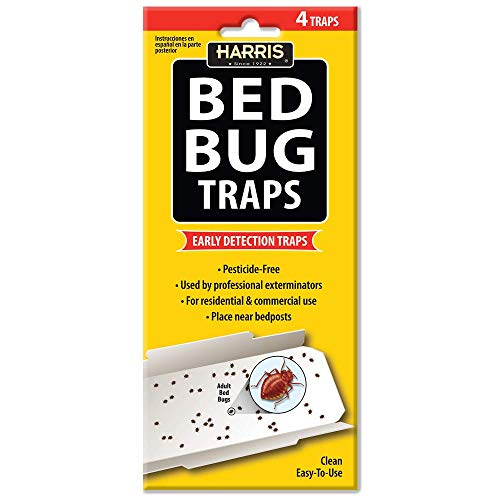
This four-pack is designed for early detection and monitoring in residential or commercial spaces. Each trap folds and stays assembled with a top tab, and its discreet shape is intended to slide under furniture or bedding.
Best for: Buyers who want simple, low-profile monitors near furniture or sleeping areas. It is selected for its foldable setup and stated use in both home and commercial settings.
Limitation: These are monitoring devices, not a complete remedy for a confirmed infestation. A trap that catches nothing does not prove that bed bugs are absent.
Raid Bed Bug Detector And Trap
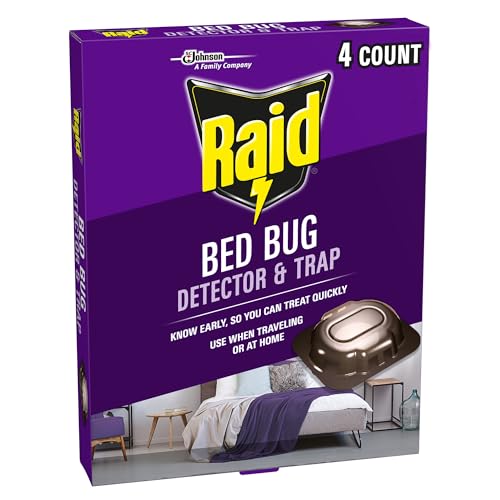
Raid’s four-count detector is for indoor use at home or while traveling. Its partially enclosed design has a see-through window intended to make captured bugs easier to identify.
Best for: People who want a visible monitoring trap that can be used at home or during travel. It is included for its inspection window and stated travel use.
Limitation: The product is a detector and trap, not a room treatment. Check traps regularly and do not rely on them alone to control a known infestation.
Buying Guide: Choosing A Bed Bug Remedy
Should you choose dust or traps?
Dust is intended for treatment where insects may travel, such as cracks and crevices, and it must be applied according to its label. Traps are useful for detecting and monitoring activity. They do not reach bugs hiding elsewhere, so a trap by itself is not a reliable eradication plan. These products have different roles rather than being direct substitutes.
What should you consider before applying a powder?
- Application: Choose a product with an applicator suited to the target area. Harris lists a puffer tip for cracks and crevices.
- Ingredients: Compare the listed materials, such as diatomaceous earth or pumice powder with plant-based oils. Read each label for handling instructions.
- Placement and exposure: Avoid spreading dust where it could become airborne or contact people and pets. Follow all label directions.
Where should you place detection traps?
Use traps in locations recommended by their instructions, such as near furniture or in luggage when the product is designed for travel monitoring. Inspect them regularly. Traps may help confirm activity, but a negative result does not rule out bed bugs.
When is professional help appropriate?
Consider contacting a licensed pest-control professional if you continue to find signs of bed bugs, the problem is spreading, or you are unsure how to treat the affected areas safely. Avoid combining pest products unless their labels specifically allow it.
Frequently Asked Questions
Can bed bug traps get rid of an infestation?
Traps can catch or detect bugs that enter them, but they do not eliminate bed bugs hiding in other parts of a room. Use them for monitoring, not as the only treatment.
Do bed bug powders kill on contact?
Product claims differ. Harris says insects that contact its powder will die within 48 hours of initial contact; EcoPest describes laboratory results within four days. Follow each product’s label and do not assume identical performance.
Are plant-based bed bug products automatically safe?
No. Plant-based ingredients do not guarantee that a product is risk-free. Read and follow the label, including precautions for people, pets, and application areas.
What is the difference between detection and treatment?
A detection product helps reveal or catch activity. A treatment product is intended to control pests in specified areas. Monitoring can guide next steps, but it does not replace treatment when bed bugs are present.
Does finding no bugs in a trap mean the home is clear?
No. A trap only checks the area and period in which it is used. Continue to inspect and monitor if you have other signs or concerns.