The best pull-down attic stairs with handrails are the ones that fit your ceiling opening and height while providing stable steps and support. The 12-step alloy system is best for buyers prioritizing a high stated capacity and dual handrails; the 12-step steel ladder is a more conventional option with a specified opening size. The wall-mounted model lists two handrails, while the Vantic and WTRAVEL listings require closer checks if a handrail is essential.
| Product | Best For | Key Detail |
|---|---|---|
| 12-Step Ti-Mg Alloy System | High stated capacity and dual rails | Up to 10 feet; 3000-pound listed capacity |
| 12-Step Steel Ladder | Defined opening dimensions | 38.9 × 31.1-inch opening; 660-pound capacity |
| Vantic Aluminum Ladder | Standard 22.5 × 54-inch opening | 10-foot model; handrail not specified in supplied details |
| Wall-Mounted Ladder | Buyers wanting two handrails | 9.67–10-foot range; 660-pound capacity |
| WTRAVEL Folding Ladder | Ceiling heights from 7 feet 8 inches | 22.5 × 54-inch opening; 375-pound capacity |
12-Step Ti-Mg Alloy Ladder With Dual Handrails
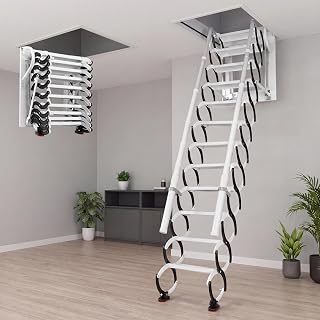
Best for: Buyers who want two handrails, anti-slip details, and a high listed load capacity. This telescoping system is described as reaching a maximum vertical height of 10 feet and supporting up to 3,000 pounds.
Its listed features include 5.5-inch-wide textured steps, a horseshoe-shaped anti-slip base, rubber pads, a triangular reinforced structure, and adjustable brackets and handrails. The product description says removable steps allow height adjustment. These details make it the most feature-rich option in this group for shoppers focused on climbing support.
Check before buying: Confirm the folded dimensions and required ceiling opening; the title lists a 28 × 28-inch folded size, but that is not necessarily the opening measurement. Verify the load rating and installation requirements against the manufacturer’s instructions.
12-Step Steel Attic Ladder With Handrails

Best for: Buyers whose ceiling opening measures 38.9 × 31.1 inches and who need a clearly stated capacity. The listing specifies reinforced steel construction, a 660-pound capacity, 12 steps, and extension up to 118 inches.
Anti-slip steps, stable foot pads, and ergonomic handrails are listed as safety features. Compared with the alloy model above, this ladder has a lower stated capacity but provides a specific opening size that can help shoppers check fit. It is described for attic and garage access.
Check before buying: The opening dimensions are specific, so measure the framed opening rather than assuming it will fit a standard hatch. Also compare the 118-inch extension with the height and clearance at your installation location.
Vantic 10-Foot Aluminum Attic Ladder

Best for: Shoppers with a 22.5 × 54-inch ceiling opening looking for an aluminum ladder listed for a 10-foot ceiling. The product name identifies the opening size and aluminum construction, which are useful starting points when comparing fit and material.
Check before buying: The supplied product information does not describe a handrail, load capacity, or step features. If a handrail is required, confirm that the exact model includes one before choosing it. Do not treat the 10-foot description as proof that it fits every ceiling at that height.
Wall-Mounted Ladder With Two Handrails

Best for: Buyers who specifically want two handrails and a ladder listed for a 9.67- to 10-foot height range. The product title also states a capacity of up to 660 pounds, making its core specifications easy to compare with the 12-step steel model.
The listing describes it as wall-mounted, so it may suit a different installation arrangement from a ceiling-hatch pull-down ladder. Check before buying: Confirm the mounting style, opening requirements, and installation location. Do not assume that “wall-mounted” means it fits a ceiling opening.
WTRAVEL Folding Aluminum Attic Ladder

Best for: Buyers with a 22.5 × 54-inch opening and a ceiling height between 7 feet 8 inches and 10 feet 3 inches. The listing specifies aluminum construction, manual operation, a 375-pound capacity, and a folding design intended to save space when stored.
Heavy-duty hinges, widened steps, non-slip footing, and a handrail design are listed. These features make it a practical comparison for homeowners seeking a folding ladder with basic climbing support, though its stated capacity is lower than those of the 660-pound options.
Check before buying: Confirm the exact handrail configuration and that the stated opening and ceiling-height ranges match your installation. The listing describes a handrail design but does not specify whether it has one or two rails.
Buying Guide: How To Choose Attic Stairs With A Handrail
Will the ladder fit the opening and ceiling height?
Measure the framed opening’s width and length, then compare those figures with the product’s required opening dimensions. Separately measure floor-to-ceiling height and check the ladder’s stated reach. A ladder that reaches the right height can still be incompatible with an opening that is too small or differently shaped.
What load capacity should you compare?
Compare the listed capacity with the total load expected during use, including the climber and anything being carried. The products here list capacities from 375 to 3,000 pounds, but those claims do not establish that every model is suitable for every home. Follow the manufacturer’s instructions and avoid exceeding the stated limit.
Which handrail and step details matter?
Check whether the product includes one or two rails, whether they can be adjusted, and whether they are positioned for the intended climb. Textured or widened steps, non-slip feet, and stable hinges are additional details to compare. If handrails are a must-have, verify them in the exact product specifications rather than relying on a general product category description.
Should you choose aluminum, steel, or alloy?
Material alone does not determine fit or safety. The listings identify aluminum, reinforced steel, or titanium-magnesium alloy, but shoppers should also compare dimensions, construction details, stated capacity, and installation requirements. Choose a product based on verified specifications for your space and intended use.
Frequently Asked Questions
Are attic stairs with handrails safer?
Handrails provide a place to hold while climbing. Anti-slip steps and stable feet are also relevant features, but correct installation and following the product’s use instructions remain important.
How do I measure for pull-down attic stairs?
Measure the ceiling opening’s inside dimensions and the floor-to-ceiling height. Compare both measurements with the model’s stated opening and reach requirements before ordering.
Is the highest listed capacity always the best choice?
No. Capacity is only one selection factor. The ladder must also fit the opening, reach the ceiling, match the installation style, and provide the handrail configuration you need.
Does every product listed include a handrail?
No. The supplied details explicitly describe handrails on some models but do not confirm them for every listing. Check the exact model specifications if a handrail is essential.
Can a wall-mounted attic ladder replace a ceiling pull-down ladder?
Not necessarily. A wall-mounted ladder may require a different mounting location and setup. Confirm its installation requirements before comparing it with a ceiling-hatch system.