The best partition divider between a kitchen and living room depends on whether you want a movable screen, storage, or a wide curtain-style boundary. The Tribesigns shelf divider suits buyers who want display space, while the RHF and VEVOR folding screens offer portable separation. A ceiling-mounted blackout curtain creates a more continuous visual barrier; the FDW screen is another folding option. Compare the listed dimensions, installation style, and storage needs before choosing.
| Product | Best For | Style |
|---|---|---|
| Tribesigns Room Divider with Shelves | Display and storage | Freestanding shelves |
| RHF Four-Panel Screen | Decorative, movable privacy | Woven folding screen |
| VEVOR Four-Panel Divider | Wide, portable separation | Folding screen |
| Ceiling-Mounted Divider Curtains | Blackout coverage | Track and curtain |
| FDW Folding Room Divider | Flexible room layouts | Folding screen |
Tribesigns Room Divider With Shelves

Best for: Open-plan homes that need a divider and useful display or storage space. This freestanding unit measures 47.2 inches wide, 11.8 inches deep, and 70.9 inches high. Its open shelves can hold books, plants, framed pictures, and daily essentials, making it more functional than a plain screen.
The product description says its MDF construction, thickened metal tubing, and 6.5-inch base support standalone placement. The open design is intended to separate areas without blocking natural light or airflow, which can suit a kitchen-living room boundary where a solid wall would feel too closed in.
Why it was selected: It combines separation with storage and display. Limitation: Open shelving does not provide the same visual concealment as a solid curtain or densely woven screen.
RHF Woven Four-Panel Room Divider
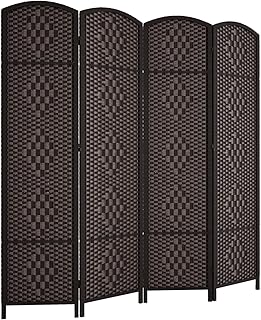
Best for: Buyers seeking a decorative screen that can be repositioned or folded away. The listing describes a dark coffee finish, a six-foot height, and panels that are 16 inches wide. Its natural-fiber weave, medallion diamond pattern, and arched bent-wood top give it a more ornamental look than a plain partition.
Two-way hinges allow the folding panels to bend in either direction and expand to a preferred length. The screen can also fold for storage. The product description says the high-density fiber weave is intended to provide privacy while concealing areas such as utility equipment or a litter box.
Why it was selected: Its foldable construction and woven design fit buyers who want a movable divider with visual character. Limitation: The listed panel count is not fully consistent: the name says four panels, while the feature text also mentions several available configurations.
VEVOR Wide Folding Room Divider
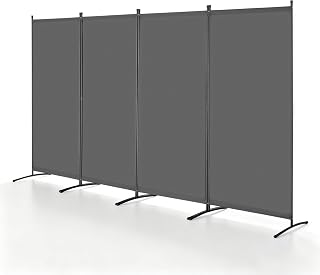
Best for: Buyers who need a broad, portable screen for a larger opening. The listing identifies this as a four-panel folding privacy screen with a stated width of 136 inches. It is described as freestanding and suitable for room separation in settings including offices, bedrooms, and studies.
For a kitchen-living room layout, the listed width makes it a candidate when a narrower folding screen may not cover enough of the opening. Its portable, folding format is preferable to a fixed installation when the boundary needs to change over time.
Why it was selected: It is the widest stated folding option among these screens. Limitation: The supplied product information does not specify material, height, or detailed construction, so verify those measurements and details before selecting it for a particular opening.
Ceiling-Mounted Blackout Divider Curtains

Best for: Buyers who want a curtain that can cover an opening and provide a stronger visual barrier than an open shelf divider. The listing describes a ceiling-mounted track set with a flexible rail, one black blackout drape, and a stated size of 8.3 feet wide by 7 feet high.
A curtain can be drawn across the boundary or opened when the kitchen and living area should feel connected. Unlike a freestanding folding screen, this option requires mounting a track to the ceiling, so it is best for buyers comfortable with that installation approach.
Why it was selected: It offers a curtain-style partition with blackout fabric and a specified track-and-panel size. Limitation: The listed width is 8.3 feet; measure the opening and confirm the included panel coverage before buying.
FDW Folding Room Divider Screen

Best for: Buyers who want a portable folding screen that can be repositioned for different uses. The title identifies a six-foot, coal-black divider, while the feature text describes panels that can be shaped to block part of a room and folded for storage. The listed uses include separating a living room, leisure area, restaurant, or dressing area.
Why it was selected: Its stated portability and flexible layout make it suitable for homeowners who do not want a permanent partition. It can be folded away when a more open floor plan is preferred.
Limitation: The product title says four panels, but the feature text says six panels of the same size. Confirm the panel count and dimensions in the current listing before choosing it for a specific span.
Buying Guide: How To Choose A Kitchen-Living Room Divider
Do you need privacy or just a visual boundary?
A woven folding screen or blackout curtain is a better fit when concealing the kitchen or creating a more private area is the priority. Open shelves separate zones while preserving sightlines and airflow, but they do not fully hide what is behind them. Consider how the divider will look from both rooms.
Should the divider be movable or mounted?
Folding screens are designed to be repositioned and stored, making them practical for flexible layouts. A ceiling-mounted track requires installation but lets a curtain open and close along a set path. Choose based on whether you want a temporary screen or a consistent boundary.
How wide and tall should it be?
Measure the opening and check the divider’s stated coverage, height, and panel dimensions. A 136-inch screen may suit a wider span, while the curtain listing specifies an 8.3-foot width and 7-foot height. Leave room for movement and avoid assuming a screen fully covers an opening based on its product name alone.
Do you want storage as well as separation?
A shelving divider provides places for plants, books, and framed items, which may reduce the need for separate furniture. It is less suitable when the main goal is concealing clutter or blocking a direct view. A plain folding screen gives up storage for a simpler, more flexible partition.
Frequently Asked Questions
What type of divider works best between a kitchen and living room?
A folding screen works well when flexibility matters. Choose open shelves for storage and display, or a curtain when you want a broad, closable visual barrier.
Can a room divider separate spaces without blocking light?
Open shelving can divide areas while allowing light and airflow through the structure. A blackout curtain is intended to create a more substantial visual barrier.
Are folding room dividers easy to store?
The RHF and FDW product descriptions say their screens fold for storage. Check the product dimensions and panel configuration to ensure the folded screen fits your available space.
Should I measure before buying a partition divider?
Yes. Measure the opening and compare it with the product’s stated width and height. Also confirm panel count, especially when the listing title and feature details differ.