The best metal building roof vent depends on what needs ventilation: a ridge system for attic airflow, a roof cap for a bathroom duct, or a flashing boot for a pipe penetration. The LCF ridge material is best for continuous ridge ventilation on ribbed panels, while the ROOFIVENT iVent ECO is designed for a 6-inch standing-seam roof opening. For smaller exhaust ducts, consider the CoVent or Hon&Guan options. The ACNOYEL kit is a pipe-flashing accessory, not a complete ventilation outlet.
| Product | Best suited for | Key detail |
|---|---|---|
| LCF Universal Vented Ridge Material | Ridge ventilation on ribbed metal roofs | 20-foot kit with adhesive backing |
| ROOFIVENT iVent ECO | 6-inch standing-seam roof exhaust | Integrated condensation drain |
| CoVent Metal Roof Exhaust Fan Vent | Bathroom or attic ducts | For 3- or 4-inch flex hose |
| Hon&Guan 4-Inch Roof Vent Cap | 4-inch bathroom exhaust duct | Galvanized steel with damper |
| ACNOYEL Roof Boots Kit | Pipe penetrations on corrugated roofs | Flexible EPDM flashing |
LCF Universal Vented Ridge Material

Best for: Buyers who want continuous airflow at the ridge of a ribbed or agricultural-panel metal roof. This is breathable ridge material installed beneath a ridge cap, rather than a stand-alone roof cap for a duct.
The 20-foot kit includes two 10-foot rolls, with a stated net free area of 18 square inches per linear foot. Its flexible profile is designed for major ribs up to 3/4 inch tall and roof slopes from 3:12 to 20:12. A full-width adhesive strip helps hold the material in position during installation.
Limitation: Check the panel rib height and roof profile before choosing it; the listed fit is for ribs up to 3/4 inch.
ROOFIVENT iVent ECO 6-Inch

Best for: A buyer seeking a 6-inch exhaust vent for a standing-seam snap-lock metal roof. The product is described for kitchen, bathroom, and dryer ventilation, so compare its opening and intended use with the duct requirements for the project.
Listed features include a condensation drain intended to help limit moisture and frost buildup, plus integrated bubble levels to assist with vertical positioning. The manufacturer also describes airflow performance in extreme weather, but the supplied details do not specify a measured airflow rate.
Limitation: It is identified for a 6-inch standing-seam profile, so it may not suit other panel styles or duct sizes.
CoVent Metal Roof Exhaust Fan Vent

Best for: Bathroom or attic exhaust applications using a 3- or 4-inch flex hose. The listed package includes an installation kit and adapter, and its design is intended for metal roof panels.
The CoVent uses an attached Deks pipe boot flashing that is designed to form to metal roof panels. Its EPDM construction is intended for this roof-vent application. Choose this product if you need an outlet for a smaller interior exhaust fan and want a kit specifically described for metal roofing.
Limitation: The product is not designed for dryer vents or heat applications, so avoid it for those uses.
Hon&Guan 4-Inch Roof Vent Cap
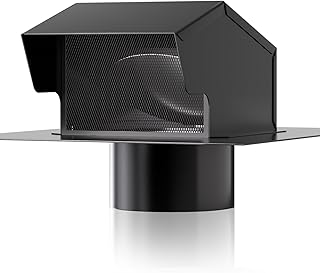
Best for: Buyers looking for a 4-inch roof cap for a ventilation system, including a bathroom exhaust application. It has a backdraft damper, galvanized steel construction, and a black polyester powder coating described as corrosion resistant.
A mesh cover with approximately 3 mm grid gaps is included to help keep small animals and birds out. The listing states airflow of up to 75% with the damper; that figure is a product claim, not a system airflow guarantee.
Limitation: The supplied features do not describe a metal-panel flashing profile. Confirm that the cap can be properly flashed and sealed for the specific metal roof before installation.
ACNOYEL Flexible Roof Boots Kit
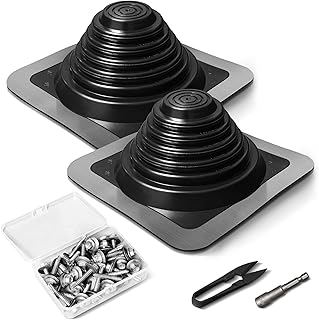
Best for: Buyers who need flashing for a pipe penetration in a corrugated roof. This two-piece kit includes EPDM and aluminum roof boots, roofing screws, a hex socket, and scissors. The flexible sleeve can be cut for pipes with outside diameters from 1/4 inch to 5-3/4 inches.
The listing says the square base adapts to various corrugated roof styles and gives a stated operating range of -65°F to 250°F. This is a flashing accessory, not a complete vent cap or fan outlet; choose it when the roof needs a pipe boot and match the sleeve to the pipe’s actual outside diameter.
Limitation: It does not provide ventilation by itself. The pipe and vent component must be selected separately.
Buying Guide: How To Choose Metal Building Roof Vents
Do you need ridge ventilation or a duct outlet?
Ridge ventilation lets air move along the roof peak and is typically paired with a ridge cap and a suitable intake-air path. A duct outlet removes air from a specific room or system. These products are not interchangeable: vented ridge material is not a bathroom exhaust cap, and a duct cap does not provide continuous attic ridge ventilation.
Will the vent fit the roof profile?
Identify whether the roof is corrugated, ribbed, or standing seam, then compare that profile with the product description. Check rib height, seam style, roof pitch, and the location of the opening. A product described for standing-seam snap-lock panels may not be appropriate for an agricultural-panel roof.
What duct size and use must it support?
Measure the duct or pipe outside diameter and confirm whether the vent is intended for bathroom, attic, kitchen, or dryer use. The CoVent listing specifies 3- or 4-inch flex hose and excludes dryer and heat applications. The ROOFIVENT product is identified as a 6-inch vent. Do not assume a roof cap supports a particular use unless its specifications say so.
How should flashing and moisture be considered?
Roof penetrations need a flashing approach suited to the metal panel. Check whether a boot or flashing is included, and follow the installation instructions for the roof and product. For ridge systems, confirm the material can follow the panel profile. For duct vents, consider features such as a damper or condensation drain when relevant to the application.
Frequently Asked Questions
What is the difference between a metal roof vent and a pipe boot?
A roof vent provides an air outlet or passage for airflow. A pipe boot is flashing that seals around a pipe penetration; it does not ventilate by itself.
Can I use a bathroom roof vent for a dryer?
Only if the product is specified for dryer exhaust. The CoVent listing explicitly says it is not designed for dryer vents or heat applications.
Is ridge vent material suitable for every metal roof?
No. Compare the product’s panel profile, rib height, roof pitch, and installation requirements with the roof. The LCF listing specifies major ribs up to 3/4 inch and slopes from 3:12 to 20:12.
What should I measure before buying a roof vent?
Measure the duct or pipe diameter, identify the roof panel style, and check the opening location and roof pitch. These details help distinguish a ridge vent, duct cap, and flashing boot.