Liquid rubber floor coatings provide seamless, flexible protection for basements, garages, decks, and exterior concrete. This guide highlights five top options, explaining who each is best for and why. Use these insights to choose a coating that resists moisture, blocks cracks, and stays flexible in temperature shifts. The table below summarizes the chosen products for quick comparison.
| Product | Best For | Key Benefit |
|---|---|---|
| Polyurethane Deck Coating | Outdoor stairs, docks, wet areas | Extra grip and waterproofing |
| Liquid Rubber Foundation Sealant | Basement and interior/exterior leaks | Elastomeric crack filler and flexible seal |
| Rubber Sealant Coating | General leaks and roofing joints | Versatile application and UV resistance |
| SENVEN Concrete Floor Paint | Garage floors and concrete surfaces | Semi-gloss finish with durable coating |
| Research Laboratories BMX5RG Blue MAX | Below-grade and interior concrete | Heavy-duty liquid rubber protection |
Polyurethane Deck Coating – Textured, Neutral Beige
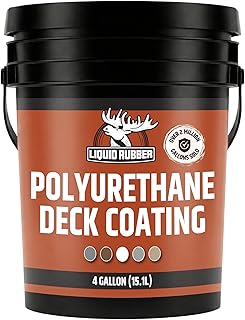
Features: textured finish, extra grip, 4-gallon container, water-resistant, designed for wood, concrete, stairs, docks, wet areas. This coating is described as stronger than standard deck paint and stain, offering a durable layer that can withstand foot traffic and moisture exposure. Best for outdoor stairs and surfaces where slip resistance is a priority. Caution: textured coatings can require longer curing times and thorough surface prep for adhesion.
- Best for outdoor stairs and wet outdoor areas requiring grip.
- Better for surfaces that need a textured, non-slip finish.
- Avoid if you need a smooth, glossy appearance.
Liquid Rubber Foundation Sealant

Features: flexible elastomeric coating; basement and indoor/outdoor use; crack filling and leak repair; 1 gallon. Best for interior basement waterproofing and below-grade surfaces. Consider if you need a sealant that expands to fill hairline cracks. Caution: restoration may require compatible primers for some substrates.
- Best for basement waterproofing and crack sealing.
- Better for flexible, long-lasting protection against moisture.
- Avoid if you require a fast-drying topcoat on metal hardware.
Rubber Sealant Coating, Black, 16 oz

Features: waterproof sealant; brush, roll, dip or pour-on application; UV resistant; 16 oz. Suitable for quick repairs on roofs, gutters, basements, and masonry. Best for small, targeted leaks and DIY touch-ups. Limitation: may require multiple coats for larger areas.
- Best for quick, small-area fixes and DIY tasks.
- Better for sporadic leak spots rather than large surfaces.
- Avoid if you need a long-term, seamless coating for large floors.
SENVEN Acrylic Concrete Floor Paint Slate Gray

Features: interior/exterior concrete paint; slate gray color; semi-gloss finish; suitable for basements, porches, and driveways. Best for a uniform, decorative finish with moderate chemical resistance. Limitation: not a pure waterproof coating; relies on proper surface prep and sealing for moisture control.
- Best for decorative, uniform flooring with moderate wear.
- Better for visible, color-matched concrete surfaces.
- Avoid if you need heavy-duty waterproof protection over cracks.
Research Laboratories BMX5RG Blue MAX

Features: 5-gallon capacity; interior and below-grade exterior concrete sealer; rubber-based liquid coating; designed for high-volume protection. Best for larger areas requiring robust moisture resistance and seamless coverage. Limitation: larger container may be more than needed for small projects.
- Best for large or multiple-room projects needing strong waterproofing.
- Better for long-term, moisture-prone installations.
- Avoid if you only have a small area to coat.
Buying Guide: How to Pick the Right Liquid Rubber Floor Coating
What is your surface type and exposure? For basements or below-grade spaces, choose coatings labeled for interior/exterior use and crack sealing. If you need slip resistance on outdoor stairs, a textured deck coating can improve safety. Consider elasticity—elastomeric formulas handle joint movement and temperature shifts better than rigid coatings.
How important is turnaround time? Some products cure quickly; others require longer dry times and multiple coats. Surface prep quality drives adhesion and durability, so plan for proper cleaning, priming, and filling cracks before applying any coating.
How large is the area and what is the budget? Large projects benefit from bigger containers to reduce waste, but ensure you have a workable working time and storage. For small repairs, compact tubes and 1-gallon options may be sufficient.
What color and finish are desired? Light or dark tones affect heat absorption and visibility of flaws. Finishes range from matte to semi-gloss; choose based on traffic, cleaning needs, and moisture exposure.
What are compatibility considerations? Some coatings pair better with concrete, masonry, wood, or metal. Confirm substrate readiness, priming requirements, and whether multiple coats or topcoats are recommended by the manufacturer.
Frequently Asked Questions
- What is liquid rubber floor coating good for?
It provides flexible, moisture-resistant protection for concrete, basements, decks, and other surfaces prone to cracking and water intrusion.
- Do liquid rubber coatings require primer?
Many formulations benefit from a primer or proper surface preparation. Follow the manufacturer’s instructions for best adhesion and durability.
- Can I apply these coatings indoors?
Yes, several products are suitable for indoor use, including basements and garages, as long as ventilation and curing times are observed.
- How long do these coatings last?
Durability depends on substrate prep, exposure, and maintenance. Regular inspections and re-coating when wear appears extend life.
- Are these coatings safe for foot traffic?
Textured or non-slip finishes provide better grip for areas with foot traffic; plan for the appropriate texture to balance aesthetics and safety.
- Is DIY installation feasible for large projects?
Yes, but proper planning, surface prep, and following product guidelines are essential for long-term results.