For a high-build masonry finish, start by matching the product to the surface: Zinsser Block Filler is the clearest choice for filling and smoothing porous masonry before a topcoat, while INSL-X WaterBlock and KILZ Basement and Masonry Waterproofing Paint are intended to help protect walls from moisture. KILZ Self-Priming Masonry Paint suits general wall finishing. SENVEN is included for horizontal concrete surfaces, but it is not a wall paint. The product descriptions do not establish a specific film thickness, so check the label for application and coverage details.
| Product | Best suited for | Key distinction |
|---|---|---|
| Zinsser Block Filler | Rough, porous masonry needing a smoother base | Filler primer before topcoats |
| INSL-X WaterBlock | Interior or exterior masonry walls | Water-based waterproofing coating |
| KILZ Basement and Masonry Waterproofing | Walls needing moisture protection | Describes resistance to water pressure |
| KILZ Self-Priming Masonry Paint | General masonry painting | Primer and paint in one product |
| SENVEN Concrete & Garage Floor Paint | Horizontal concrete surfaces | Not for vertical surfaces |
Zinsser Block Filler Masonry Primer
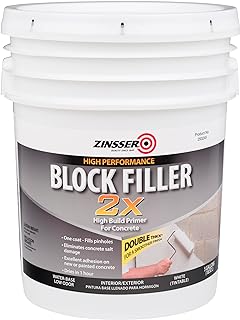
Best for: Rough or porous walls that need filling and smoothing before a finish coat. This is a primer, not a standalone decorative masonry paint, making it the most directly relevant option when the goal is a fuller, more even base.
Its listed uses include interior and exterior concrete, cinderblock, brick, stucco, fiber cement siding, plaster, mortar, and concrete masonry units. The high-hiding formula has a flat white finish, and the product description lists coverage of up to 500 square feet, depending on application method and surface porosity.
Why it was selected: It is specifically described as filling and smoothing masonry before topcoats. Limitation: The final painted appearance requires a separate topcoat.
INSL-X WaterBlock Acrylic Masonry Waterproofer

Best for: Interior or exterior vertical masonry walls where waterproofing is a priority. The water-based coating is listed for basement walls, foundations, retaining walls, cinder blocks, stucco, brick, and concrete.
The product description highlights fast drying and high alkali resistance up to pH 13. Choose this if the project calls for a wall coating with waterproofing intent and the surface is within the stated masonry uses.
Why it was selected: It combines wall-surface suitability with waterproofer positioning and is specified for both indoor and outdoor use. Limitation: The listed information does not give a coverage rate or specify how much surface texture the coating fills; consult the product label before planning coats.
KILZ Basement And Masonry Waterproofing Paint

Best for: Concrete and masonry walls where the product’s stated water-pressure resistance is important. KILZ lists protection against up to 12 PSI of water pressure and use on basement walls, stucco, brick, concrete blocks, and retaining walls, indoors or outdoors.
The paint is described as alkali resistant and formulated for high-moisture areas. For below-grade use, the product information says to fill holes and cracks with hydraulic cement before painting.
Why it was selected: Its stated pressure-resistance detail helps distinguish it from general masonry paint. Limitation: It is not for floors or walls with active water leaks. The product description also calls for repairing openings before below-grade application.
KILZ Self-Priming Masonry Paint

Best for: Buyers who want an interior/exterior masonry paint with self-priming properties. The acrylic latex, water-based formula is listed for smooth, rough, and textured surfaces, including masonry, stucco, and brick.
Listed features include hiding properties, adhesion, water repellency, and alkali resistance up to pH 12. It can be applied by brush, roller, or sprayer and cleans up with soap and water. Choose this for general masonry painting when a dedicated waterproofing claim or separate filler primer is not the primary need.
Why it was selected: It serves as a versatile wall-finish option across indoor and outdoor surfaces. Limitation: Its listed alkali resistance is lower than INSL-X WaterBlock’s stated pH 13, and it is not presented as a dedicated waterproofer.
SENVEN Acrylic Concrete And Garage Floor Paint

Best for: Horizontal concrete surfaces such as basement floors, garages, porches, driveways, and pool decks. The acrylic formula is described as resisting hot-tire pickup, scuffing, cracking, peeling, and fading, and it provides a satin finish.
The listing says coverage is up to 120 square feet per gallon and specifies use on properly prepared porous concrete, masonry, stone, and brick. Choose it for a floor project rather than a vertical wall.
Why it was selected: It covers an adjacent masonry-painting need for concrete floors. Limitation: The manufacturer says it is not for vertical surfaces, areas with hydrostatic pressure, or forklift traffic; it is described for residential use.
Buying Guide: Choosing Masonry Paint Or Filler
Do you need a smoother, fuller-looking surface?
Choose a block filler primer when porous block or rough masonry needs filling before the decorative coat. Zinsser is the product in this group explicitly described for filling and smoothing surfaces. A masonry paint may color and protect a wall, but the provided product details do not establish that it will fill deep texture or gaps.
Is moisture protection the main concern?
Compare the intended use and limits. INSL-X is a water-based wall waterproofer with stated resistance to high alkalinity. KILZ Basement and Masonry Waterproofing Paint gives a specific pressure-resistance claim, but it is not for active leaks. Repair cracks as directed and address the underlying source of water before painting.
Will the paint go on a wall or floor?
Surface orientation matters. INSL-X, both KILZ wall products, and Zinsser list wall or vertical masonry uses. SENVEN is for horizontal surfaces and expressly excludes vertical surfaces. Do not use a floor coating as a wall paint based only on shared concrete or masonry materials.
What should you check before buying?
- Confirm that the label lists your exact surface and indoor or outdoor location.
- Check whether the product is a primer, filler, general paint, or dedicated waterproofer.
- Review surface-preparation requirements, coverage, application method, and drying instructions on the product label.
- For below-grade walls, address cracks and active water problems before coating.
Frequently Asked Questions
What is high-build masonry paint?
It generally refers to a coating intended to leave a thicker film or help cover surface texture. The supplied product details do not specify film thickness, so verify that claim on the current label.
Which product is best for filling rough block?
Zinsser Block Filler Masonry Primer is the clearest match because it is described as filling and smoothing masonry before topcoats.
Can masonry paint stop an active basement leak?
Do not assume so. KILZ Basement and Masonry Waterproofing Paint is specifically listed as unsuitable for walls with active water leaks.
Can SENVEN floor paint be used on a masonry wall?
No. Its listed limitations say it is not for vertical surfaces.
Does self-priming paint remove the need for surface preparation?
No. Self-priming describes the product’s application role, but surfaces still need preparation according to the manufacturer’s instructions.