For glue-down tile flooring, choose an adhesive made for the specific tile and subfloor: ROBERTS 2057 is intended for vinyl composition tile (VCT), while ROBERTS Universal covers several resilient flooring types. The quart-size 2057 is suited to smaller projects, and DAP Multi-Purpose Floor Adhesive is an option to investigate only after checking its label for your materials. Peel-and-stick tiles are a no-extra-glue alternative, not a conventional glue-down product.
| Product | Best suited for | Important distinction |
|---|---|---|
| ROBERTS 2057-1, 1 gallon | VCT projects | For eligible tile and listed substrates |
| ROBERTS Universal, 1 gallon | Multiple resilient flooring types | Pressure-sensitive formula |
| ROBERTS 2057-0, 1 quart | Smaller VCT jobs | Same stated uses as the gallon size |
| Peel-and-stick floor tiles | Projects avoiding separate glue | Self-adhesive, not standard glue-down tile |
| DAP Multi-Purpose Floor Adhesive | Buyers checking a multipurpose option | Provided details do not specify compatible flooring |
ROBERTS 2057-1 VCT Adhesive, 1 Gallon

This SBR latex adhesive is formulated for vinyl composition tile, excluding self-stick tile. The listed features describe it as solvent-free, with quick dry time and enhanced grab. It supports direct-bond and double-bond installation methods.
Best for: VCT installation where the flooring and prepared substrate match the product listing. Listed bond surfaces include concrete, APA-rated plywood, one layer of existing finish-free VCT, aged cutback adhesive residue, primed gypcrete, and terrazzo.
Why it was selected: Its stated applications and substrate list make it a clear option for conventional VCT glue-down work. Limitation: It is not listed for self-stick tile, and suitability depends on the exact substrate and installation instructions.
ROBERTS Universal Resilient Flooring Adhesive

This solvent-free acrylic latex pressure-sensitive adhesive is listed for luxury vinyl tile (LVT), luxury vinyl plank (LVP), VCT, vinyl sheet goods, and vinyl-backed carpet tile. The product description notes high initial strength and an improved environmental footprint.
Best for: Buyers installing one of the listed resilient flooring types who want an adhesive described for multiple applications. Listed surfaces include properly prepared concrete, flooring-grade APA-rated plywood, steel, marble, terrazzo, and existing well-bonded vinyl tile, excluding self-stick tile. It is also listed for radiant-heated subfloors when surface temperature does not exceed 85°F.
Why it was selected: It covers more flooring categories than the VCT-specific 2057 products. Limitation: The heated-subfloor condition has a stated temperature ceiling; confirm the flooring manufacturer’s requirements too.
ROBERTS 2057-0 VCT Adhesive, 1 Quart
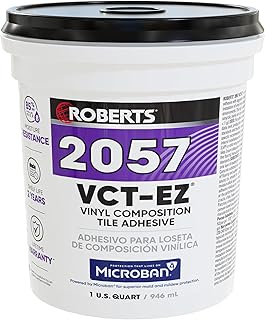
This quart-size SBR latex adhesive shares the listed 2057 uses: installing VCT, excluding self-stick tile, with direct-bond or double-bond methods. It is described as solvent-free and offering quick dry time and enhanced grab.
Best for: Smaller VCT jobs or buyers who need a smaller container than the one-gallon 2057 option. Its listed bond surfaces include concrete, APA-rated plywood, finish-free existing VCT, aged cutback residue, primed gypcrete, and terrazzo.
Why it was selected: It provides a smaller-size choice while retaining the stated VCT application profile. Limitation: The listing does not make it suitable for self-stick tile; check required coverage and installation guidance before buying.
Peel-and-Stick Herringbone Floor Tiles

These 12-by-12-inch PVC tiles are self-adhesive and are presented as an indoor flooring option for rooms such as bathrooms, kitchens, and bedrooms. The listing describes a sealed surface, water and stain resistance, and a wear-resistant layer. The package is described as covering 30 square feet.
Best for: A buyer seeking a tile-style refresh without applying separate flooring glue. Choose this if a self-adhesive product fits the project; it differs from tiles installed with a separate adhesive.
Why it was selected: It offers a no-extra-glue alternative related to the same flooring project. Limitation: It is not a conventional glue-down tile product, so do not treat it as a substitute where the installation specifically calls for separate adhesive.
DAP 141 Multi-Purpose Floor Adhesive

This one-quart product is identified as a multi-purpose floor adhesive. The supplied product details do not specify compatible tile types, approved substrates, installation methods, or performance characteristics.
Best for: Buyers considering a general-purpose adhesive who can verify from the container label or current manufacturer instructions that it matches their flooring and subfloor.
Why it was selected: Its floor-adhesive category makes it relevant to the search, but the available information is less specific than the ROBERTS listings. Limitation: Do not assume compatibility with a particular tile based only on the phrase “multi-purpose.”
Buying Guide: How to Choose Glue for Tile Flooring
Which adhesive matches the tile?
Start with the flooring type, not the word “tile” alone. VCT, LVT, LVP, sheet vinyl, and vinyl-backed carpet tile can have different adhesive requirements. ROBERTS 2057 is listed for VCT, while ROBERTS Universal names several resilient flooring categories. Confirm the exact flooring product’s installation instructions before choosing.
Does the adhesive work with your subfloor?
Check that the adhesive lists your actual substrate and that the surface meets its preparation requirements. The listed 2057 substrates include concrete and specified plywood, among others. ROBERTS Universal lists properly prepared concrete and flooring-grade APA-rated plywood, as well as several other surfaces. Do not infer that an unlisted surface is approved.
How much adhesive should you buy?
Compare the project area with the package size and the product’s stated coverage instructions. The products here include gallon and quart options, but the provided details do not give coverage rates. Check the container or manufacturer guidance rather than estimating from package size alone.
What should you check before installation?
- Verify tile and adhesive compatibility using both manufacturers’ instructions.
- Follow requirements for substrate preparation and installation method.
- Check any special conditions, including the listed 85°F surface-temperature limit for ROBERTS Universal on radiant-heated subfloors.
- Distinguish self-adhesive tiles from flooring that requires separately applied glue.
Frequently Asked Questions
Is peel-and-stick tile the same as glue-down tile?
No. Peel-and-stick tile has its own adhesive backing and does not use separately applied flooring glue. Check the flooring instructions to make sure that installation type suits the project.
Can ROBERTS 2057 be used for self-stick tile?
The product details explicitly exclude self-stick tile. It is listed for VCT installation, including tile-over-tile use under the stated conditions.
Can one adhesive work for LVT and VCT?
ROBERTS Universal lists both LVT and VCT among its intended flooring types. Confirm the particular floor manufacturer’s adhesive requirements before installation.
Can I install tile over existing flooring?
Some listed products describe bonding to specific existing surfaces, such as one layer of finish-free VCT for ROBERTS 2057 or well-bonded vinyl tile for ROBERTS Universal. Existing flooring must meet the listed conditions; check the product instructions before covering it.
What is the safest way to choose a floor adhesive?
Match the adhesive’s stated flooring type, substrate, and installation method to the project. When product details do not confirm compatibility, consult the current label or manufacturer instructions before proceeding.