For a dry-stack stone look, choose between individual real-stone pieces and lightweight polyurethane panels. The thin concrete veneer options are best for buyers seeking individual stones and a natural, tight fit. The WallWell Fogstone panels suit small accent areas, while ROOMTEC’s six-pack is better for larger DIY projects. Compare material, coverage, and installation format before deciding; “dry stack” describes the look, but the products differ in how they create it.
| Product | Format | Best For |
|---|---|---|
| WallWell Fogstone | Two PU panels | Small accents and extensions |
| Thin Concrete Veneer, White Tones | Individual stones | Natural-looking flat walls |
| ROOMTEC Six-Pack | PU panels | Larger DIY projects |
| Three-Pack Faux Stone Panels | PU panels | Light-brown wall coverage |
| Thin Concrete Veneer, Gray Tones | Individual stones | Gray-toned stone walls |
WallWell Fogstone PU Veneer

These two polyurethane panels are designed to imitate stacked stone, with a hand-painted rock texture and 1.38-inch relief for pronounced shadows. The lightweight panel format offers a faster-looking route to a dry-stack effect than placing individual stones, though installation details should be checked for the intended wall.
Best for: Small accent walls, niches, or matching and extending an existing panel installation. The pair covers about 6.5 square feet, making the stated coverage useful for planning compact areas.
Cut edges should be painted in the panel’s main shade for a finished appearance. The product’s hand-painted surface is described as forgiving of small brush marks. Limitation: Two panels cover a relatively small area, so larger projects may require multiple packs.
Thin Concrete Veneer, White Tones

This white-tone option uses individual thin concrete stones rather than molded panels. The listing specifies 8 square feet of primary stones per box for flat-wall coverage. Separate pieces can form a tighter, more natural-looking surface than panel seams, which makes this format relevant to shoppers prioritizing an authentic stone appearance.
Best for: Buyers who want a light, neutral stone palette and individual pieces instead of repeating panel patterns. The product description says it is exceptionally thin and lightweight and can install directly on drywall and most substrates without fasteners, metal lath, or structural changes.
Limitation: Each box includes 8 square feet of primary stones, so calculate the wall area and account for layout needs before ordering. Confirm that the specific substrate and installation conditions suit the project.
ROOMTEC Six-Pack PU Stone Panels

ROOMTEC’s six-pack is a polyurethane panel option measuring 45 by 12 inches per panel, according to the product name. The listing describes realistic stone texture and says the panels can be cut for DIY projects. It mentions screws, an electric screwdriver, saws, and adhesives as tools or materials used to achieve installation results.
Best for: DIYers planning a larger wall project who prefer long panels over setting individual stones. The product description highlights use for interior and exterior decor and presents high-density PU as lighter than real stone.
Limitation: The listing describes several styles and colors, including stacked stone, castle stone, and limestone. Check the selected variation and installation requirements rather than assuming every option has identical appearance or application details.
Three-Pack Light Brown Faux Panels
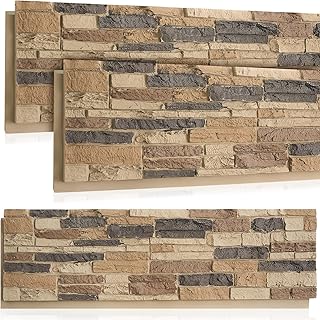
This package includes three PU panels, each approximately 11.8 by 45.6 inches. The listing describes them as faux siding panels for indoor and outdoor decor and identifies the color as light brown. It also states that the material is UV resistant and gives the panels a B1 fire rating.
Best for: Shoppers seeking a warm, light-brown panel finish for a wall project. The longer panel shape may suit broad surfaces where a continuous faux-stone pattern is preferred to arranging separate stones.
Limitation: The package contains three panels, so check the dimensions against the full project area before purchasing. Review the product’s installation guidance and confirm that its stated rating and intended use meet local project requirements.
Thin Concrete Veneer, Gray Tones

This gray-tone version uses individual concrete stones, not panels, and includes 8 square feet of primary stones per box. The product description says the thin, lightweight pieces create a tight fit that hides the wall surface and gives a natural stone-wall appearance.
Best for: Buyers who want gray tones and prefer individual stones for a less panel-like finish. The listing says it installs directly on drywall and most substrates without fasteners, metal lath, or structural changes.
Limitation: The stated 8-square-foot coverage is for primary stones. Confirm the full materials needed for the planned layout, and check substrate suitability before starting.
Buying Guide: How To Choose Dry Stack Stone Veneer
Do you want real stone pieces or panels?
Individual concrete stones provide a piece-by-piece layout and are the better fit when avoiding visible panel repetition is a priority. PU panels are molded to create a stone effect in larger sections, so they may simplify a DIY installation. Compare the desired appearance with the installation format, not just the product’s “stone veneer” label.
How much coverage do you need?
Measure the wall’s height and width and calculate its area. Compare that number with the stated coverage: 6.5 square feet for the WallWell pair and 8 square feet of primary stones per concrete-veneer box. For the other panel packs, use the listed panel dimensions and verify the coverage for the chosen product variation. Allow for cuts and layout planning.
Which color and location fit the project?
Choose white tones for a lighter palette, gray tones for a cooler look, or light brown for a warmer appearance. For exterior use, rely on the particular product’s stated application and installation instructions. Do not assume that every veneer material or color variation is suitable for every wall or exposure.
Frequently Asked Questions
What does dry-stack stone veneer mean?
It refers to a stone appearance with tight joints and little or no visible mortar. The products here create that look with either individual stones or faux panels.
Are panels or individual stones better for a natural look?
Individual stones allow a tighter, varied layout, while panels create a repeated molded pattern. The preferred option depends on the desired finish and project approach.
How much area does the white or gray concrete veneer cover?
Each listed box includes 8 square feet of primary stones for flat-wall coverage.
Can faux stone panels be cut?
The ROOMTEC listing describes its PU panels as cuttable and mentions saws among the tools used for installation. Follow the selected product’s directions.
Can these products go directly on drywall?
The concrete veneer listings state that they install directly on drywall and most substrates. Verify the specific wall conditions and instructions before installation.