No door lock is completely dementia-proof, but the right device can add a layer of protection against unsupervised wandering. For circular doorknobs, the PKLIYH cover is best for quick, tool-free installation, while the yingranlock model adds a combination code. The PRIME-LINE device covers a keyhole, the Wappa Baby lever locks are intended for lever handles, and the EverPlus latch is a home-security reinforcement—not a wandering-prevention device. Check fit and preserve a safe, accessible exit plan before installing any lock.
| Product | Best suited for | Important fit or use note |
|---|---|---|
| PKLIYH knob cover | Tool-free coverage of circular knobs | Not UV resistant |
| yingranlock combination cover | Keyless access to a knob cover | Initial password listed as 000 |
| PRIME-LINE lock-out device | Blocking access to a keyed knob’s keyhole | Fits specified round knobs only |
| Wappa Baby lever locks | Lever handles with enough flat mounting space | Uses adhesive |
| EverPlus reinforcement latch | Reinforcing an inward-swinging entry door | Not designed as a dementia wandering barrier |
PKLIYH Tool-Free Circular Knob Cover
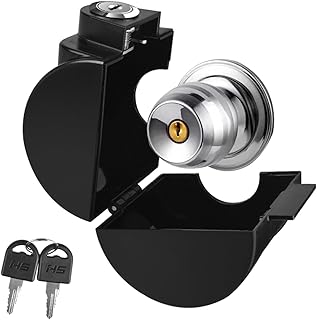
Best for: Caregivers seeking a simple cover for a compatible circular knob. The device snaps over the knob without tools or adhesive, and its self-locking mechanism and anti-skid grooves are intended to keep it in place. The listed uses include bedroom and bathroom doors, faucets, gas valves, cabinet knobs, and RV handles.
It was selected because it is explicitly described for preventing people with dementia from accidentally opening doors, while installation is straightforward. The product description says it allows emergency access, but caregivers should confirm how that works in their home and keep exits usable. Limitation: It is not UV resistant, so the listing cautions against assuming it will withstand prolonged sun exposure outdoors.
yingranlock Combination Knob Cover

Best for: Buyers who prefer a code-operated cover instead of carrying a key. The listing describes a combination lock, an initial password of 000, and installation directly over a circular knob without tools. It also covers the keyhole, which may prevent other keyholders from accessing it while the device is in place.
Choose this if a password mechanism suits the caregiver’s routine and the knob shape is compatible. The code feature is the main distinction from a basic snap-on cover. Limitation: The supplied information does not specify a code-reset procedure or emergency-release method. Confirm those details and make sure authorized caregivers can operate it before relying on it.
PRIME-LINE Keyhole Lock-Out Device

Best for: A home with a keyed-entry round doorknob where covering the keyhole is the main goal. This diecast device is described as fitting round knobs up to 2-7/16 inches in diameter, with a 1-3/16-inch circular shaft opening. Its removable cylinder can be taken out for cleaning when unlocked.
It was selected for its specific keyhole-blocking function and stated dimensions, which make fit checks possible before purchase. It may be a better choice when blocking access to a keyed knob matters more than adding a combination. Limitation: It is not listed as a universal cover. Measure the knob and shaft opening; it may not fit non-round handles or knobs outside the stated dimensions.
Wappa Baby Adhesive Lever Locks

Best for: Doors with lever handles, where circular-knob covers are not the appropriate shape. This four-pack uses durable ABS and 3M adhesive and is described as allowing one-hand operation for adults. Its listed dimensions are 3.25 inches long, 1.5 inches wide, and 4.5 inches high.
Choose this if the door has a suitable flat panel and enough clear space around the lever. The product is included because it addresses a common handle-style mismatch that can make knob covers unsuitable. Limitation: Installation requires a flat surface at least 4.5 inches high and 1.5 inches wide, according to the listing. Check the door surface before applying the adhesive.
EverPlus Door Reinforcement Latch

Best for: Someone seeking added resistance to forced entry on an inward-swinging door, rather than a device specifically intended to prevent wandering. The listing describes a metal latch, eight screws, and installation with a power screwdriver and drill. It is operated by sliding the lock away from its base plate.
This product is included as a distinct security option, but it should not be confused with a dementia safety lock. Limitation: It requires installation on the door frame and could impede exit when engaged. Consider whether it is appropriate for the resident and household emergency plan before using it.
Buying Guide: How To Choose A Dementia Door Safety Device
What handle type does the door have?
Start by identifying whether the door uses a circular knob or a lever. The PKLIYH, yingranlock, and PRIME-LINE options are designed around circular knobs, though PRIME-LINE gives specific size limits. The Wappa Baby locks are for lever handles and require a clear, flat mounting area. Do not assume a cover fits just because it is described as universal; compare the product dimensions and installation requirements with the actual door.
Do you need a cover, a code, or stronger door hardware?
A basic knob cover provides a physical barrier over a compatible knob. A combination cover avoids carrying a key, but the caregiver needs to know and manage the code. A keyhole lock-out device specifically blocks access to the keyhole. A reinforcement latch serves a different purpose: it strengthens a door against forced entry and is not a substitute for a wandering-prevention plan.
How should safety and emergency access affect the choice?
Any device that restricts a door can create an exit or rescue concern. Before installation, consider the resident’s mobility, the location of the door, who needs to operate the device, and how caregivers will respond in an emergency. Follow local fire-safety guidance and consult a qualified professional if unsure. No lock replaces supervision, environmental planning, or an individualized care plan.
Frequently Asked Questions
Are dementia-proof door locks completely reliable?
No. These devices may add a barrier, but the product information does not establish that any option will prevent every attempt to open a door. Match the device to the door and care situation.
Can a knob cover fit a lever handle?
These listed knob covers are described for circular knobs. For a lever handle, consider a lever-specific product and confirm its mounting-space requirements.
Which listed option uses a combination?
The yingranlock cover is described as having a code lock, with an initial password of 000. Check the listing for code-management and release details.
Is the EverPlus latch a wandering-prevention lock?
No. Its listed purpose is reinforcing an inward-swinging door against forced entry. It may also affect exit access, so assess its use carefully.