For buyers seeking a permanent, variegated color on concrete, acid-based stains offer a chemically reactive, semi-transparent finish that won’t peel like paint. These five products are professional-grade options ideal for floors, patios, countertops, walls, and more. Each is best for different project types and surfaces, from indoor floors to outdoor walkways. The following sections highlight features, best-use cases, and practical cautions to help you choose smartly.
| Product | Brand | Best For |
|---|---|---|
| Concrete Acid Stain | Tru Tint by Walttools | Walttools Store | Durable floors and countertops; rich, uniform color options |
| Acid Concrete Stain Professional Grade – Clay Canyon | Concrete Resurrection Store | Semi-transparent, variegated marbleized finish for indoor/outdoor concrete |
| Concrete Acid Stain | Brown Mosaic | Floor Supply | Natural marbling and classic brown tones |
| Cement Stain Concentrate – Onyx | Concrete Resurrection Store | Layered, customizable colors for interior/exterior concrete |
| Concrete Acid Stain | Cola | Floor Supply | Natural marbling with semi-transparent color |
Concrete Acid Stain Tri Tint by Walttools

Best for: professionals seeking a deep, chocolate-toned finish on floors or countertops. The product is designed for standard concrete, vertical applications, overlayment, and microtoppings to achieve consistent effects. It is described as permanent and chemically reactive, creating natural variegation after a reaction period. Choose this if you want a durable, dark brown spectrum with versatile application methods. A potential limitation is handling and surface preparation accuracy required for even results.
Acid Concrete Stain Professional Grade – Clay Canyon

Best for: surfaces where a translucent, variegated marbleized look is desired. This stain chemically reacts with lime in concrete for a permanent finish that won’t peel, suitable for floors, patios, driveways, garages, and sidewalks. It works well indoors and outdoors with UV-stable properties. Best used when you want a natural, layered appearance rather than solid color. Limitation: color depth can vary by batch and substrate porosity.
Concrete Acid Stain | Brown Mosaic 1 Gallon
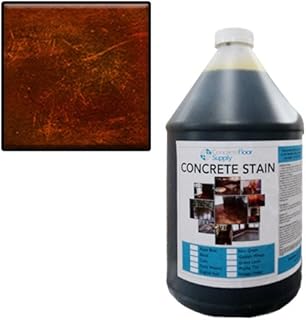
Best for: natural marbling in brown tones. The product offers a permanent color through chemical reaction and is described as professional-grade yet accessible to users with proper surface prep. Best chosen for decorative floors and areas where a classic, earthy look is preferred. Caution: results depend on concrete porosity and age; inconsistent absorption can yield uneven patterns.
Cement Stain Concentrate – Onyx

Best for: projects that require layered color effects and customization. This water-based concentrate mixes with water to penetrate clean, porous concrete rather than sitting on top as paint. It supports semi-transparent color for interior floors, patios, walkways, and driveways. Choose this if you want to build multiple color tones in one application. Limitation: it requires careful mixing and timing to achieve even marbling.
Concrete Acid Stain | Cola

Best for: natural marbling with a cola-toned palette. The stain reacts chemically to create permanent, variegated color that resembles natural stone. It is suitable for decorative concrete projects on floors, walls, and outdoor surfaces. Consider this option if you prefer a cooler brown with subtle variances. Limitation: color intensity may vary with substrate porosity and sealer compatibility.
Buying Guide
What to consider when choosing an acid-based concrete stain:
- Surface type and preparation: For best results, ensure the concrete is clean, laitance-free, and properly cured. Porosity affects color depth and uniformity.
- Indoor vs outdoor use: UV stability matters for exterior applications. Indoor uses may benefit from sealers to control glare and durability.
- Color depth and variation: Acid stains produce variegated effects; plan for natural variation and sample test patches to predict results.
- Application method: Spraying, brushing, or sponging can yield different patterns. Choose a product that suits your skill level and aesthetic goal.
- Layering and color mixing: Some concentrates allow multiple tones; ensure compatibility with other stains and sealers you plan to use.
- Safety and ventilation: Use appropriate protective gear and ensure proper ventilation when applying chemical stains.
- Sealing and longevity: A proper sealer helps protect color and facilitates easier maintenance. Check compatibility with chosen stain.
Quick questions buyers often ask
- Do these stains peel or fade over time? No, when applied correctly, the color is permanent and chemically reactive with concrete.
- Can I use these indoors? Yes, many are suitable for interior floors and walls, with UV-stable formulations for outdoor use.
- Will color look the same on all concrete? No, results vary with porosity, age, and surface preparation, so test patches are advised.
- Is sealing necessary after staining? Sealing is often recommended to protect color and ease maintenance.
- Are these easy for DIY? They are described as professional-grade but accessible with proper preparation and safety measures.
- Can I layer colors? Some concentrates allow layering and marbling; follow product instructions for best results.
Glossary of terms
- Permanent color: The stain chemically reacts and becomes an integral part of the concrete surface.
- Marbling: A natural, stone-like pattern created by varying depths of color.
- Porosity: The absorbency of the concrete that affects color depth and uniformity.
- Sealer: A protective layer that helps preserve color and surface integrity.
Frequently Asked Questions
- What is the main benefit of acid-based concrete stains? They provide permanent, semi-transparent color with natural variegation that won’t peel like paint.
- Can I apply acid stains to new concrete? Yes, but proper curing and surface prep are essential for even color.
- Do these products require professional application? Some products are marketed for DIY use with clear instructions, though surface prep is critical.
- Will the color change if I seal the surface? Sealing typically preserves the color; some seals may slightly alter gloss or sheen.
- How long does the color last? The color is designed to be permanent, assuming correct application and sealing.
- Is color consistency guaranteed across large areas? Not guaranteed; test patches and consider batching to minimize variation.