The best stair nosing for a step edge depends on the stair material, exposure, and installation preference. Adhesive vinyl and rubber-style trims suit buyers seeking a flexible, peel-and-stick option, while aluminum nosing offers a rigid edge protector for higher-traffic stairs. The products below include options for indoor and outdoor use, with different lengths and surface designs. Measure each step before choosing, and confirm the listed finish and dimensions for the specific item.
| Product | Best For | Key Feature |
|---|---|---|
| Self-Adhesive Rubber Stair Nosing | Smooth stair surfaces | Grooved, waterproof trim |
| 48-Inch Aluminum Nosing | Cut-to-fit projects | Fluted aluminum surface |
| Trimold Vinyl Nosing | Long runs of flexible trim | 16.4-foot adhesive roll |
| 36-Inch Aluminum Peel-and-Stick Nosing | Multi-step installations | Five-piece pack |
| Self-Adhesive Rubber Stair Nosing, Alternate Listing | Buyers comparing listings | Same features as the first listing |
Self-Adhesive Rubber Stair Nosing
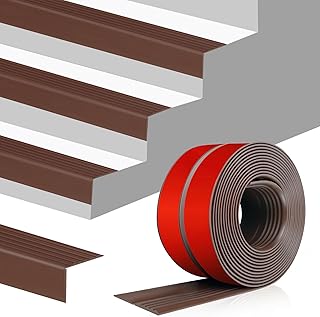
This stair edge trim is best for buyers who want a peel-and-stick protector for a smooth stair surface. Its listed features include a grooved design intended to increase friction, waterproof and stain-resistant vinyl, and adhesive backing for installation without a separate fastening system.
It was selected as a straightforward option for people prioritizing simple installation and a surface that is described as easy to clean. The listing says the trim is designed for use in high-traffic areas, but the adhesive is specified for smooth surfaces. Avoid choosing it for a rough or uneven stair edge unless the manufacturer confirms that surface is suitable.
48-Inch Aluminum Stair Edge Protector

This rigid aluminum nosing is best for buyers who need a 48-inch piece that can be shortened. The listed dimensions are a 2-inch top face, a 1.5-inch drop, and a 48-inch length. The description says it can be cut with standard snips or a hacksaw and can be used on carpet, hardwood, tile, and concrete stairs indoors or outdoors.
Its fluted surface makes this a practical choice when a defined, non-slip metal edge is preferred. One detail needs checking before purchase: the title says aluminum mill silver, while the feature description mentions a dark bronze anodized finish. Confirm the actual finish and fastening requirements for the specific listing.
Trimold Flexible Vinyl Stair Nosing
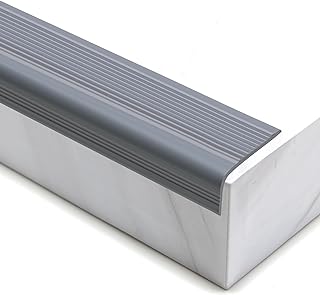
Trimold’s 16.4-foot gray strip is best for buyers covering several stair edges or needing flexible trim by the roll. Its thickened triangular serrated grooves are described as providing traction. The product features also list adhesive backing and use on surfaces including tile, wood, marble, steel, iron, metal, and glass.
Choose this option if a long roll and flexible material matter more than a rigid metal profile. The listing states that the strip can be repositioned or removed without residue, but actual results can depend on the stair surface and installation conditions. Measure the total edge length and allow for cutting before applying the adhesive.
Five-Pack 36-Inch Aluminum Stair Nosing

This five-pack is best for buyers fitting multiple steps with matching aluminum trim. Each listed piece measures 36 inches, with a 2-inch top and 1.5-inch drop. The serrated grooves are described as helping increase friction, and the aluminum alloy is listed as waterproof, rust-resistant, wear-resistant, and non-fading.
The product is described for indoor and outdoor use and is available in other listed lengths, including 48 and 72 inches. Check the package dimensions and color before installation, as the feature list advises confirming the desired color after receiving the items. Do not assume the adhesive will suit every stair material without checking the product instructions.
Self-Adhesive Rubber Nosing Alternate Listing
This listing is best for buyers comparing another listing for the same named stair trim. Its supplied features match the first self-adhesive option: grooved, anti-slip edging; waterproof and stain-resistant vinyl; and adhesive backing intended for smooth surfaces. Those details make it relevant for shoppers seeking flexible trim that is easy to clean.
The product data provided does not identify a difference in material features or intended use from the other listing. Compare the listing’s available dimensions and installation directions before deciding. As with the matching option, the smooth-surface adhesive limitation is important; a textured, dusty, or uneven edge may not provide a suitable bonding surface.
Buying Guide: How To Choose Stair Nosing
Which material fits the stair surface?
Flexible adhesive trim is intended for direct application and can be useful when a low-profile, cut-to-length strip is wanted. Aluminum nosing provides a rigid edge profile and is listed for surfaces such as hardwood, carpet, tile, and concrete on the 48-inch model. Check the product’s installation directions for the exact surface and fastening method rather than assuming all stair materials are interchangeable.
How should you compare length and coverage?
Measure the exposed edge of every step, then compare it with the individual strip length or roll length. The aluminum options listed here come as 36-inch pieces or a 48-inch piece, while the Trimold product is a 16.4-foot roll. Account for cuts and any gaps you want to avoid. Confirm the top-face width and drop as well as the length, since those dimensions determine how the trim sits over the stair edge.
What matters for indoor or outdoor installation?
Some listed products are described for both indoor and outdoor use, and several feature claims mention water resistance or waterproof construction. Exposure to moisture does not by itself establish that a particular adhesive will bond to every surface. Prepare the stair according to the instructions, and check the product description for the intended environment and installation requirements.
How important is the surface texture?
Grooves, flutes, or serrations are included to improve traction, but tread design alone does not guarantee a slip-proof stair. Consider who uses the stairs, the lighting, the stair condition, and whether the trim is securely installed. Replace or address any loose section rather than relying on it as a safety measure.
Frequently Asked Questions
What does stair nosing do?
Stair nosing covers or defines the exposed front edge of a step. These products are described as edge protectors, and several have textured surfaces intended to increase traction.
Can adhesive stair nosing be installed on any surface?
No. The first rubber-style listing specifies a smooth surface. Other listings describe broader surface applications, but buyers should follow the exact product instructions and check surface preparation requirements.
Can aluminum stair nosing be cut to size?
The 48-inch aluminum listing says it can be shortened with standard snips or a hacksaw. Check the installation instructions and use appropriate tools and safety precautions.
Should I choose a roll or individual strips?
Choose a roll when covering a longer run or cutting flexible trim to several lengths. Individual aluminum strips may suit buyers who prefer a rigid profile and already know the required piece lengths.
Do textured grooves guarantee stairs are slip-proof?
No. Grooved or serrated surfaces are described as improving friction, but they cannot guarantee slip-free use. Secure installation and suitable stair conditions remain important.