The best emergency break glass door release depends on your door circuit and reset preference. The UHPPOTE key-resettable switch suits buyers who want to restore a triggered unit without replacing its panel, while the UHPPOTE dual-pole model offers separate contact groups for door release and alarm feedback. The SDC pull station is suited to multi-door circuits and includes a local alarm. Dioche and Goshyda offer emergency release switches with flame-retardant materials; check their wiring details before purchase.
| Product | Best For | Key Feature |
|---|---|---|
| UHPPOTE Key Resettable | Reusable testing and resets | Supplied reset key; NO/NC dry contact |
| SDC 492 Pull Station | Multiple doors on one circuit | 2-SPDT contacts and local alarm |
| UHPPOTE Wired Security Button | Separate release and alarm signals | DPDT contacts with two groups |
| Dioche Emergency Release | Access-control installations | Flame-retardant PC material |
| Goshyda Emergency Release | Fire-alarm controller signaling | Fire-resistant materials |
UHPPOTE Key-Resettable Emergency Release
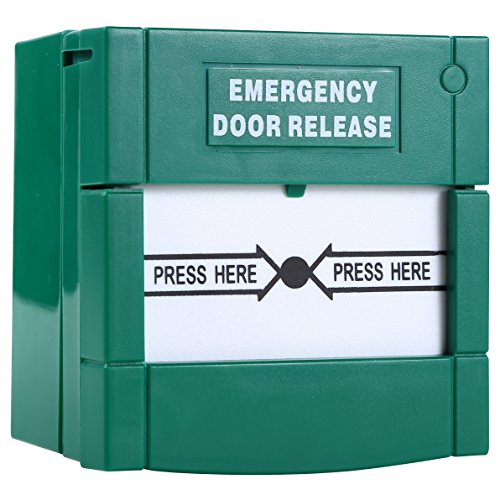
This switch is best for buyers who want a break-glass-style release that can be reset after a test or accidental activation. Its supplied reset key restores normal status without replacing the glass panel. The switch has a single-pole NO or NC dry contact for connection to an electric-lock release circuit or a fire-alarm signal.
The flame-retardant ABS housing and high-visibility text make the control easier to identify. Choose this model if resetability and a straightforward dry-contact output are priorities. Its limitation is that the listed output is single-pole, so buyers needing separate contact groups should compare it with the dual-pole UHPPOTE model. Confirm circuit requirements before installation.
SDC 492 Pull Station

The SDC 492 is best for installations where one emergency station must release multiple doors on the same circuit. Its two SPDT contacts are specified for releasing all doors on that circuit and providing remote annunciation. A built-in local alarm is standard, and the product includes four replacement glass plates.
Choose this station if multi-door release and local audible notification matter more than a key-resettable panel. The replacement plates provide spares for the break-glass mechanism. Unlike the UHPPOTE resettable option, this product is described with replacement glass plates rather than a supplied reset key. Check that its contact configuration suits the existing system.
UHPPOTE Dual-Pole Security Button

This UHPPOTE model is best for buyers who need separate contact groups for door unlocking and fire-alarm feedback. Its DPDT design has independent NO, NC, and COM terminals in two groups: one group can serve the door-release function, while the other provides alarm-system signal feedback. The product description says breaking the glass cuts power to a magnetic lock or electric strike.
The flame-retardant ABS enclosure and high-visibility text support quick identification. Choose this model over a single-pole switch when the system requires two independent contact groups. Its listed operation requires breaking the glass, so it is not the right choice if a resettable panel is a requirement. Verify the panel and lock circuit specifications before wiring.
Dioche Flame-Retardant Emergency Release

This Dioche switch is best for buyers seeking an emergency release described for use with electric control or access-control systems. It is made from flame-retardant PC material and has a stated operating temperature range of -10 to 55 degrees Celsius. The listing says it can be embedded for installation and includes a user manual.
Choose it if those material and installation details match the project. The product description does not specify contact type or terminal arrangement, so buyers should confirm the wiring configuration before ordering. That missing detail makes it harder to compare directly with switches that list NO, NC, COM, SPDT, or DPDT contacts.
Goshyda Red Emergency Door Release

The Goshyda release is best for buyers looking for a red break-glass alarm button described as sending a fire-alarm signal to a controller. Its sandblasted panel is described as having an elegant finish, and the listing says it uses fire-proof materials. The product is presented for settings such as homes and shopping malls.
Choose this option when controller signaling and the listed material description fit your needs. The product information does not provide a contact layout, temperature range, or reset method. Confirm those specifications with the seller and compare them with the existing access-control or alarm circuit before selecting it.
Buying Guide: How To Choose An Emergency Break Glass Door Release
Does the circuit need NO, NC, SPDT, or DPDT contacts?
Match the switch contacts to the door lock and alarm panel requirements. NO and NC describe contact states; SPDT and DPDT describe contact arrangements. The UHPPOTE key-resettable unit lists single-pole NO or NC contacts, while the wired UHPPOTE lists two independent DPDT contact groups. SDC specifies 2-SPDT contacts. For products that do not list wiring details, ask for a wiring diagram before purchase.
Should the release reset, or use replacement glass?
A key-resettable design can return to normal status with its supplied key, which is useful after testing or accidental activation. A break-glass unit may instead require a replacement plate after use. The SDC listing includes four replacement glass plates. Decide whether reset convenience or replacement components better suit the site’s procedures.
Does the station need a local alarm or remote feedback?
Check whether the installation requires sound at the release point, a signal to a remote panel, or both. SDC specifies a built-in local alarm and remote annunciation contacts. The UHPPOTE dual-pole model lists a separate contact group for fire-alarm feedback. Do not assume a model has an alarm feature unless its specifications say so.
What should be checked before installation?
Confirm the lock type, control-panel wiring, contact configuration, mounting method, and reset procedure. Also check the product’s stated operating conditions and whether the enclosure fits the intended location. Emergency release equipment must work with the building’s complete door and alarm system; have a qualified installer verify the design and installation where appropriate.
Frequently Asked Questions
What does an emergency break glass door release do?
It provides a manual emergency input that can release an access-controlled door or signal a fire-alarm system, depending on its wiring and configuration.
Can a break-glass release work with an electric lock?
Some products are described for electric locks or access-control systems. Confirm that the switch contacts and wiring match the specific lock and control panel.
What is the benefit of a resettable release?
A resettable unit can be returned to normal status with a key after activation, avoiding replacement of the glass panel for a test or accidental trigger, as specified for the UHPPOTE resettable model.
Are all emergency release switches wired the same way?
No. Contact types and terminal arrangements vary. Compare the product’s NO, NC, COM, SPDT, or DPDT specifications with the system requirements before installation.
Should an emergency release be installed without checking local requirements?
No. Confirm applicable building and fire-safety requirements and have the complete door-release system reviewed by a qualified professional.