Interlocking deck tiles are a practical way to cover an old concrete patio without laying a new surface. Choose wood tiles for a natural finish, or plastic tiles for a water-resistant, low-maintenance option. Jurax is best for buyers who want warm acacia wood and a raised drainage base; Neoaider suits shoppers seeking lightweight plastic tiles. The options below differ in finish, drainage design, and stated coverage, so check your patio’s dimensions and surface condition before choosing.
| Product | Best For | Notable Feature |
|---|---|---|
| Jurax Acacia Tiles | Natural wood appearance | 10 square feet per box |
| GREEN ALLUVIUM Acacia Tiles | Pre-finished wood | Raised water channels |
| Neoaider Plastic Tiles | Water-resistant plastic | Tool-free interlocking |
| DECKIFY Acacia Tiles | Drainage and grip | Grooved slats and raised base |
| THYOI Acacia Tiles | Patterned wood coverage | Cut-to-fit design |
Jurax Red Oak Acacia Deck Tiles
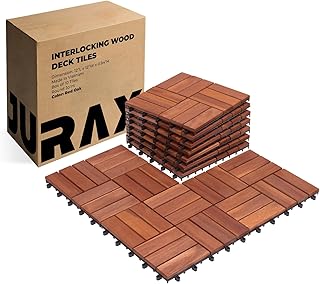
Best for: Homeowners who want an outdoor wood look over a concrete patio and value a stated coverage amount. Each box contains 10 square tiles measuring 12 by 12 inches and covers 10 square feet.
The tiles use solid Vietnamese acacia with a pre-oiled, sanded surface. Their elevated PPC plastic base allows water to drain underneath and air to circulate. The tiles snap together and can be rearranged or expanded, making them suitable for a patio layout that may change.
Why it stands out: The product combines a natural wood surface with a raised base and clearly specified box coverage. Limitation: Wood is not as water-resistant as plastic; the listing describes it as weather-ready, but does not specify a maintenance schedule.
GREEN ALLUVIUM Acacia Wood Tiles

Best for: Buyers who want pre-finished wood tiles without applying a sealant before installation. The acacia tiles arrive finished with cured linseed oil, and the raised base channels water beneath them.
The listing describes thick hardwood slats and a 466-pound distributed capacity. Tiles are offered in three colors and two patterns, including striped and crossed designs. They are intended for flat, stable surfaces, which makes a sound, level concrete patio an important starting point.
Why it stands out: Its pre-finished surface and choice of colors and patterns provide flexibility without requiring initial sealing. Limitation: The manufacturer specifies flat, stable placement, so this is not a solution for uneven or crumbling concrete.
Neoaider Dark Grey Plastic Tiles

Best for: Patio owners who prefer a plastic surface over wood. The product is described as waterproof and weather-resistant, and its lightweight construction can be assembled or taken apart without tools.
The nine 12-by-12-inch tiles have a wood-grain texture on top and a grid structure underneath. The interlocking design supports different layout patterns, and the listing says the tiles can be cut to fit irregular areas. The textured surface is intended to improve friction.
Why it stands out: Plastic offers a different material choice for buyers who prioritize water resistance and quick assembly. Limitation: This option does not provide the natural wood surface of the acacia products, and the supplied details do not state its box coverage in square feet.
DECKIFY Gray Striped Acacia Tiles

Best for: Buyers who want wood tiles with a specified load capacity and a drainage-focused design. Each 12-by-12-inch tile is 0.9 inches thick, with deep-groove slats and a raised PPC base to channel water away.
The tiles use solid acacia with a linseed-oil finish. The listing states a 490-pound capacity and describes a textured surface for slip-resistant grip. Clips lock together by hand, and the tiles can be expanded or reconfigured as needed.
Why it stands out: The stated capacity, raised drainage base, and hand-assembled connectors make its key features easy to compare. Limitation: Its wood surface still differs from an all-plastic option if avoiding wood care is the priority.
THYOI Black Crossed Acacia Tiles

Best for: Buyers who want a dark, patterned wood finish or need to adapt tiles around an irregular patio shape. The 10-tile box covers approximately 10 square feet, and the product listing says tiles can be cut to fit.
These natural acacia tiles have a deep-oil finish and crossed slats. An elevated snap-lock PPC base and spacing between slats are designed to support airflow and water runoff. The product is also described as removable for temporary use.
Why it stands out: The crossed pattern and stated cut-to-fit capability suit patios with edges or obstacles that need a custom layout. Limitation: Cutting requires careful measuring, and cuts may affect how neatly tiles connect at the perimeter.
Buying Guide: Choosing Tiles For Concrete
Is the patio ready for deck tiles?
Check that the concrete is stable and reasonably level before covering it. Interlocking tiles create a surface layer; they do not repair cracks, correct a slope, or make damaged concrete structurally sound. Remove loose debris and consider how rainwater currently drains. Raised bases can allow water to move beneath tiles, but the patio still needs a drainage path.
Should you choose wood or plastic?
Choose acacia if the appearance and feel of natural wood are priorities. The listed wood options include finishes and raised bases, but wood may need more attention over time than plastic. Choose plastic if a water-resistant material is more important than natural grain. Compare the product’s stated texture, assembly method, and care guidance before deciding.
How many boxes do you need?
Measure the patio’s length and width, then multiply them to estimate square footage. Add a small allowance for edges, cuts, or mistakes. Jurax and THYOI list about 10 square feet per box; confirm the coverage for other products before ordering. Measure around posts, steps, or other obstacles, and check whether the tile shape suits your layout.
What should you compare before buying?
- Base design: Raised bases and slat gaps are intended to support drainage and airflow.
- Installation: Interlocking systems may be assembled by hand; some options can be cut, while others emphasize reconfiguration.
- Finish and pattern: Compare wood tone, color, and slat direction with the patio and nearby outdoor furniture.
- Surface condition: Follow the product’s guidance for flat, stable placement, and avoid covering concrete that needs repair.
Frequently Asked Questions
Can interlocking deck tiles cover an old concrete patio?
Yes. These products are designed as surface flooring that can be placed over an existing patio. The concrete should be stable and suitable for the tile system.
Do deck tiles fix cracked or uneven concrete?
No. Deck tiles cover the surface but do not repair concrete or level a patio. Address significant damage and uneven areas before installation.
Are wood deck tiles waterproof?
The listed wood tiles have finishes and raised bases intended to help manage moisture, but they are not the same material as waterproof plastic. Check the specific product’s care instructions.
Can patio deck tiles be removed?
Interlocking tiles can generally be disconnected, and several listings describe rearranging or taking tiles up. Follow the product’s installation guidance to avoid damaging connectors.
How do I estimate the amount of tile needed?
Multiply patio length by width to estimate the area, then compare that figure with each box’s stated coverage. Allow extra for cuts and edges, especially for irregular layouts.