Rubber curved stair nosing can add textured traction and cover exposed stair edges, but the right choice depends on the stair profile, coverage needed, and installation surface. The 12-foot pre-angled L-shaped trim is best for stairs with a 90-degree edge; the 7-foot strip suits buyers covering a shorter run; and the 15-pack is better for multiple steps. Two additional self-adhesive edge protectors offer grooved traction for smooth surfaces.
| Product | Best suited for | Notable feature |
|---|---|---|
| 7-foot rubber stair nosing | One shorter stair run | Cut-to-length adhesive strip |
| Self-adhesive edge protector, option one | Smooth surfaces | Grooved, waterproof trim |
| Self-adhesive edge protector, option two | Smooth surfaces | Grooved, stain-resistant trim |
| 12-foot pre-angled L-shaped trim | Defined 90-degree stair edges | Pre-angled profile |
| 15-pack rubber stair nosing | Several steps | Multiple 3.3-foot strips |
7-Foot Rubber Stair Nosing

This 7-foot adhesive strip is best for a short stair edge or a project where one continuous length is preferred. Its grooved rubber surface is designed to increase traction, while the trim covers sharp stair edges. The listed material features include resistance to water, sunlight, fire, and wear.
The product is described for indoor and outdoor stairs made from materials including tile, wood, marble, concrete, and glass. To install it, clean and dry the area, measure and cut the strip, remove the backing, and press it firmly into place. Choose this option if its 7-foot length matches the coverage required. It may not be sufficient for a longer run without additional pieces.
Grooved Self-Adhesive Edge Protector
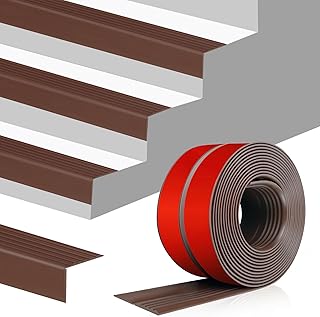
This edge protector is best for buyers seeking a grooved, self-adhesive trim for a smooth stair surface. The listed features include wear resistance, waterproofing, and stain resistance. Its grooves are intended to add friction, and the adhesive backing is described as strong for secure placement, including in high-traffic areas.
Choose this product when easy cleaning and adhesive installation are priorities. The listing specifies smooth surfaces for installation, so it may not be the right choice for a rough, dusty, or uneven stair edge. Prepare the surface as directed by the product information and confirm that the trim’s size and profile suit the stair before ordering.
Self-Adhesive Rubber Stair Edge Trim

This second self-adhesive trim is also best for smooth surfaces where a grooved edge protector is wanted. Its listed features match the other option: a wear-resistant material, waterproof and stain-resistant construction, grooved traction, and adhesive backing intended to hold in high-traffic areas.
It is a reasonable comparison choice when the product’s listed profile or appearance better fits the project. The supplied details do not state its length or a distinct material difference from the similar edge protector above, so check the listing for dimensions and configuration before selecting between them. Avoid assuming either trim will adhere reliably to a surface that is not smooth and properly prepared.
12-Foot Pre-Angled L-Shaped Stair Trim

This 12-foot trim is best for a stair with a defined 90-degree edge. Its pre-angled L-shaped profile is designed to cover the tread edge and vertical drop. The listing describes a grooved back at the fold and widened acrylic adhesive tape intended to reduce lifting. It also identifies the rubber molding as a bumper over hard edges.
The product is described for indoor and outdoor use, including wooden stairs, basement steps, thresholds, and RV or camper steps. Choose it if the angled profile matches your stair and you want a longer continuous length. Its stated design targets a 90-degree drop, so it may not fit stairs with a substantially different edge shape.
15-Pack Rubber Stair Nosing Strips

This set is best for buyers covering several steps or preferring separate 3.3-foot strips. The listed pack contains 15 pieces in light brown. Each grooved rubber strip is described as wear-resistant and suitable for indoor or outdoor use. The product information lists compatibility with surfaces including tile, wood, marble, concrete, and glass.
Installation involves cleaning and drying the stair, measuring and cutting each strip, peeling off the protective film, and pressing the adhesive firmly into place. The shorter individual pieces can be practical when a stair layout requires separate lengths. However, multiple pieces mean more joins than a single continuous strip, so measure each step carefully before installation.
Buying Guide: How To Choose Rubber Curved Stair Nosing
Which profile matches the stair edge?
Check whether the stair has a rounded or curved edge, a square edge, or a 90-degree vertical drop. A pre-angled L-shaped product is specifically described for a 90-degree drop. The other listings describe strips or edge protectors, but do not provide enough profile measurements here to confirm a fit for every curved stair. Compare the product shape with the actual stair before buying.
How much length or coverage is needed?
Measure each stair edge and add the lengths to determine total coverage. A 7-foot strip is aimed at a shorter run, while a 12-foot trim offers a longer continuous length. The 15-pack includes fifteen 3.3-foot strips, which can suit multiple steps. Account for cuts and joins, and verify product dimensions if the listing does not clearly specify them.
What should you check before sticking it down?
Adhesive products depend on proper surface preparation. The listed installation instructions call for cleaning and drying the area before application. One edge-protector listing specifies smooth surfaces. Check that the stair is clean, dry, and compatible with the adhesive, and press the trim firmly as directed. Do not treat the product description as a substitute for checking the stair’s condition.
Is indoor or outdoor use important?
Several products are described for both indoor and outdoor use, and the 7-foot and 15-pack listings mention resistance to water and sunlight. Still, compare the exact product details with the location and expected exposure. A stair nosing strip adds a traction surface and edge covering, but it does not correct a damaged or unstable stair.
Frequently Asked Questions
Can rubber stair nosing be cut to length?
The 7-foot and 15-pack product details say the strips can be measured and cut to the required size. Follow the product’s instructions when trimming.
Does adhesive stair nosing work on every stair surface?
No universal surface fit is established by these listings. One specifies smooth surfaces, while other listings name materials such as wood, tile, concrete, marble, and glass. Check the product details and prepare the surface.
Which option is better for covering several steps?
The 15-pack provides fifteen 3.3-foot strips and is described for multiple stair sections. Measure the steps first to confirm the total coverage.
What does grooved stair nosing do?
The grooves are intended to increase friction and provide a textured surface. The strips also cover stair edges, according to the product descriptions.