For slippery timber decking, screw-fixed anti-slip strips offer a durable way to add traction, while adhesive grip tape can cover wider areas with fewer joins. The zosenda strips are best for compact coverage with stainless-steel construction; the 24-inch polypropylene strips suit longer runs; and the wide tape is better for broad, smooth areas. Compare material, dimensions, fixing method, and the surface where you plan to install each product.
| Product | Best for | Installation |
|---|---|---|
| zosenda 5-Piece Strips | Short sections and steps | Screws |
| Heavy-Duty GRP Strips | Decks, ramps, and outdoor steps | Screws |
| 24-Inch Polypropylene Strips | Longer coverage per strip | Screws and plugs |
| 18-Inch Anti-Slip Tape | Wide areas with fewer seams | Adhesive backing |
| Myard Stair Treads | Timber steps and varied surfaces | Screws |
zosenda Stainless-Steel Decking Strips

These five strips measure 50 mm by 400 mm and combine stainless steel with a quartz-grit walking surface. The strips are pre-drilled, cut to size, and supplied with self-tapping countersunk screws for installation on wood.
- Best for: Timber deck steps or smaller sections where short, screw-fixed treads are practical.
- Why it stands out: Its stainless-steel construction and angular grit surface are designed for grip in wet or icy conditions.
- Consider: Each strip is 400 mm long, so covering a broad deck may require multiple pieces and more installation points.
Choose this option when you want a compact tread rather than a continuous roll. The supplied fixings make it a direct choice for wood surfaces, but plan the layout around the strip length.
Heavy-Duty GRP Anti-Slip Strips

This five-pack contains 16-by-2-inch strips with a 3 mm fiberglass-reinforced plastic profile and an aggressive quartz-grit surface. The strips are pre-drilled and include screws. The listed installation surfaces include wood, composite decking, concrete, and metal.
- Best for: Outdoor steps, ramps, and deck areas that need fixed, individual treads.
- Why it stands out: The GRP construction and grit surface are designed for traction in rain, frost, and mud.
- Consider: The 16-inch length may provide less coverage per piece than the 24-inch option below.
Choose this set if you prefer a rigid strip with mechanical fasteners over adhesive tape. Its short format is useful for targeted areas, but a longer run will need careful spacing and additional pieces.
24-Inch Polypropylene Decking Strips
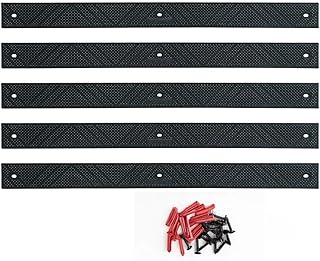
Each of the five strips measures 24 by 2 inches. The product is made from polypropylene reinforced with fiberglass, with a textured surface and UV-stable construction. Pre-drilled holes and included screws and plugs are intended for fixing to wood, concrete, or metal.
- Best for: Buyers who want longer individual treads to cover more distance per strip.
- Why it stands out: Its 24-inch length exceeds the 16-inch strips in this selection, reducing the number of separate pieces needed for some layouts.
- Consider: A 2-inch-wide strip creates a defined tread rather than covering a full deck board or broad walking area.
This is a practical option for deck steps and ramps where longer, screw-fixed strips fit the layout. Check the deck-board spacing and intended placement before drilling so the fixings can be secured appropriately.
Extra-Wide 18-Inch Anti-Slip Tape

This 18-inch-wide roll uses an 80-grit aluminum oxide surface and waterproof acrylic adhesive backing. It is listed for sealed wood, composite, metal, concrete, tile, and plastic, for indoor and outdoor applications.
- Best for: Broad, smooth areas where a wide strip can reduce the number of seams.
- Why it stands out: The roll format covers more width than the screw-fixed treads and can be cut to fit an area.
- Consider: It uses adhesive rather than mechanical fasteners, so it may not suit every timber surface or installation preference.
Choose this product if the deck area is suitable for adhesive-backed grip and you want fewer separate strips. For uneven or weathered timber, compare the surface condition with the product’s listed applications before choosing tape.
Myard Screw-Down Stair Treads

Myard’s 16-by-2-inch strips use engineering PA6, fiberglass-reinforced material, and an anti-UV component. The product includes three wood screws per strip and lists use on surfaces including wet or mossy wood, metal, tile, vinyl, and concrete.
- Best for: Timber stairs or deck steps where screw-down installation is preferred.
- Why it stands out: The product provides a specific installation instruction to leave a quarter-turn of slack after tightening, allowing for material expansion and contraction.
- Consider: Each strip is 16 inches long, so measure each step and plan the position before installation.
Choose Myard when its installation guidance and listed surface range match the project. The strips are stair-tread-sized rather than full-width deck coverings, so they are best used as positioned grip zones.
Buying Guide: Choosing Anti-Slip Timber Decking
Should you choose strips or tape?
Screw-fixed strips are a strong option when you want a defined tread attached with mechanical fasteners. They come in set lengths and widths, so compare those dimensions with the boards or steps. Wide adhesive tape can cover more area with fewer joins, but its listed surfaces and adhesive installation make surface suitability an important check.
Which material and grip surface matter?
Compare the stated construction, not just the product name. The options here include stainless steel with quartz grit, fiberglass-reinforced plastic with quartz grit, polypropylene reinforced with fiberglass, and aluminum oxide grit on adhesive tape. All are described as textured or grit-based, but their materials and fixing methods differ.
How should you plan installation?
Measure the target area, decide where each tread will sit, and confirm that supplied fixings match the intended surface. Keep strips aligned and avoid placing them where their edges interfere with normal foot placement. For adhesive tape, check that the timber is among the suitable surfaces stated for the product.
What should you compare before buying?
- Coverage: Compare each strip’s length and width with the area to be treated.
- Fixing method: Choose screws for fixed treads or adhesive for a wide grip strip where suitable.
- Exposure: Review the product’s stated outdoor, moisture, UV, or weather-related features.
- Quantity: Estimate the number of strips needed before selecting a pack.
Frequently Asked Questions
Do anti-slip strips work on timber decking?
The products listed here include strips intended for wood or timber applications. Select a suitable fixing method and check the product’s stated surface compatibility before installing.
Are screw-down strips better than anti-slip tape?
Neither method is best for every deck. Screw-down strips provide individual mechanically fixed treads, while wide tape can cover a larger area with fewer seams when the surface is suitable for adhesive.
Can these products be used outdoors?
Several products are described for outdoor use or wet conditions. Check each product’s listed material and weather-related features, and follow its installation directions.
How many decking strips do I need?
Measure the steps or walking zones you want to treat, then compare those measurements with each strip’s length and width. The required quantity depends on your deck layout and preferred spacing.