For exterior tongue and groove boards, choose a product specifically documented for outdoor use and confirm its installation requirements before buying. Among these five options, the cedar cladding panels are the clearest match because their listing mentions exterior ceiling decor; the other cedar panels and pine boards are presented mainly for walls or general projects, so verify their exterior suitability. The thicker bingaai cedar boards are better suited to buyers prioritizing substantial material, while the shorter and longer versions differ in coverage and board length.
| Product | Best suited for | Key detail |
|---|---|---|
| Western Red Cedar T & G Cladding | Exterior-ceiling projects to verify | 21 square feet per box |
| bingaai Cedar, 4 ft | Fewer joints on longer runs | ½-inch thick; 10.6 square feet |
| bingaai Cedar, 3 ft | Shorter sections and layouts | ½-inch thick; 9.7 square feet |
| Western Red Cedar Wall Panels | Cedar wall accents | 21 square feet per box |
| Prestige Pine T&G Boards | Finished pine applications | V-groove and end matched |
Western Red Cedar T&G Cladding Panels

Best for: Buyers comparing cedar boards for an exterior ceiling or cladding project. The product title specifically mentions exterior ceiling decor, making it the most directly exterior-oriented option in this selection. The listing describes Canadian red cedar with a clear surface and a package covering 21 square feet.
The boards come in varied lengths from 12 to 55 inches, which may help with layouts that use shorter pieces. They are described as tongue and groove, so check the listing and package details for the actual dimensions and installation guidance before planning cuts or ordering quantities.
Limitation: The listing does not provide detailed exposure, finish, or maintenance specifications. Confirm that the boards are suitable for your particular outdoor conditions rather than assuming the exterior-ceiling wording covers every use.
bingaai 4-Foot Thick Cedar Panels

Best for: Buyers who want longer, solid cedar boards for walls, ceilings, or feature panels. These Western red cedar planks are listed as ½ inch thick and cover 10.6 square feet. Their four-foot length may mean fewer board joints than shorter pieces in a comparable layout.
The listing describes precision-milled tongue-and-groove edges and says the boards can be installed horizontally, vertically, or diagonally. It also notes that the thickness can accept nails, staples, or construction adhesive. The product is presented for walls, saunas, accent walls, and DIY projects.
Limitation: The listed applications do not specifically establish suitability for outdoor exposure. Choose this option for exterior work only after confirming the manufacturer’s guidance for weather exposure, fastening, and finish.
bingaai 3-Foot Thick Cedar Panels

Best for: Projects where shorter cedar boards are easier to handle or fit. This version is also ½ inch thick and features Western red cedar with tongue-and-groove edges. The package is listed to cover 9.7 square feet, and the manufacturer describes use on walls, ceilings, and feature panels.
The listing says the boards can be cut with a standard miter saw or circular saw and attached with nails, staples, or adhesive. Compared with the four-foot version, this option provides shorter pieces and slightly less stated coverage per package, which may be useful when planning smaller areas.
Limitation: The listing emphasizes indoor and humid-room applications rather than exterior weather exposure. Do not treat the moisture-resistance claims as proof that the boards can be left outdoors without suitable installation and protection.
Western Red Cedar Wall Panels
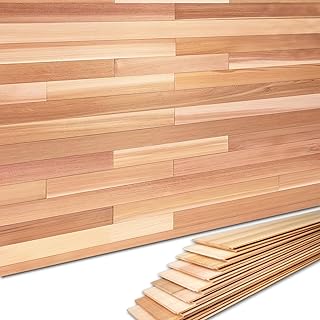
Best for: Buyers seeking natural cedar planks for a wall accent or a project where varied board lengths are useful. The listing states that one box covers 21 square feet and includes boards ranging from 16 to 55 inches long. It describes Canadian red cedar as having a pronounced texture and few knots.
The product is marketed as wall panels and described as untreated natural wood. Those details may appeal to shoppers who want a natural-looking surface, but the listing does not establish that the panels are designed for exterior installation.
Limitation: Exterior cladding suitability, finish, and weathering instructions are not specified in the supplied product details. Confirm these points before using the boards outdoors.
Prestige Smooth Finish Pine Boards
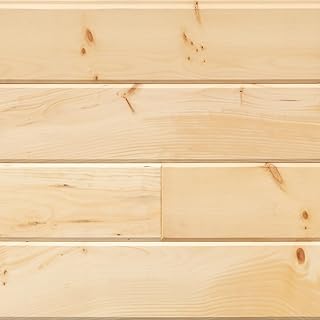
Best for: Buyers comparing a finished pine tongue-and-groove option. The listing identifies an eight-piece set with a smooth finish, V-groove profile, and end-matched boards. These features can help shoppers seeking a defined groove appearance and board ends designed to meet.
Unlike the cedar options, this product is identified as pine. The available details do not provide board dimensions, coverage, or an explicit exterior-use statement, so compare the full product specifications with your project before choosing it.
Limitation: The supplied information does not confirm outdoor suitability or describe a weather-protective finish. Avoid selecting it for exterior exposure without verifying the intended use and required protective treatment.
Buying Guide: Choosing Exterior Tongue And Groove Boards
Are the boards actually rated for outdoor use?
Check the manufacturer’s intended-use statement, installation instructions, and recommended finish. “Cedar” or “moisture resistant” alone does not establish that a board is suitable for prolonged exposure to rain, sun, or changing temperatures. In this selection, only one product title specifically mentions exterior ceiling decor, and buyers should still verify its requirements.
Which wood and thickness fit the project?
Compare species, thickness, and the stated use. The bingaai panels are listed as ½-inch Western red cedar and may suit buyers seeking thicker boards for walls or ceilings. The pine product is finished and V-grooved, but its supplied details do not identify exterior performance. Match the board to the project rather than choosing by appearance alone.
How much coverage and what board length do you need?
Measure the surface and allow for cuts and layout waste. The listed packages range from 9.7 to 21 square feet. Longer boards may reduce the number of joints in some layouts; varied or shorter lengths may be easier to work into smaller areas. Confirm actual dimensions and package coverage before calculating quantities.
What should you verify before installation?
Confirm fastening instructions, substrate requirements, finishing recommendations, and whether the boards need acclimation. For outdoor installations, ask how to protect exposed surfaces and edges, and follow applicable building requirements. Do not assume that tongue-and-groove joints alone make a wall or ceiling weatherproof.
Frequently Asked Questions
What are exterior tongue and groove boards used for?
They create a joined board surface on applications such as cladding or ceilings. The right product depends on its documented exterior suitability and the installation conditions.
Is cedar automatically suitable for exterior use?
No. Cedar species and natural properties do not replace product-specific guidance about exposure, finish, fastening, and maintenance.
Does tongue and groove mean the installation is waterproof?
No. The joint connects adjacent boards, but it does not by itself guarantee a waterproof assembly. Follow the product instructions and project requirements.
Should I choose three-foot or four-foot cedar boards?
Choose based on layout, handling, and package coverage. The listed three-foot version covers 9.7 square feet, while the four-foot version covers 10.6 square feet.
Can interior wall panels be used outdoors?
Not unless the manufacturer confirms they are intended for the specific outdoor application. Verify exposure limits and protective requirements before installation.