For fiberglass hot tub refinishing, choose a coating only if its instructions specifically allow the surface and the heat, water, and chemical exposure your tub will experience. Of these five products, Rust-Oleum and Magic are spray-on options that list fiberglass; Ekopel is a pour-on option that also lists fiberglass. The roll-on and NADAMOO kits offer different application styles, but verify hot-tub suitability with the manufacturer before use. A coating made for ordinary tubs may not be rated for a heated, chemically treated hot tub.
| Product | Application | Best suited to |
|---|---|---|
| Rust-Oleum Tub & Tile | Spray | Small areas and spray application |
| Magic Tub and Tile Kit | Spray | Fiberglass surfaces and guided prep |
| Bathtub Refinishing Kit | Roll-on | Buyers seeking a two-part coating |
| Ekopel 2K | Pour-on and roller | Low-odor application |
| NADAMOO Kit | Brush or roller | A kit with prep and application tools |
Rust-Oleum Tub & Tile White Spray Paint

Best for: Small fiberglass areas where a spray-on application is preferred. The product lists fiberglass among compatible surfaces and uses a one-step epoxy-acrylic formula designed to withstand moisture and extreme hot temperatures.
The spray dries to the touch in 15 minutes and covers up to 15 square feet per can, according to the supplied product details. Those figures describe handling and coverage, not readiness for hot-tub use. The surface must dry fully for three days before water exposure.
Limitation: Confirm with the manufacturer that the coating is appropriate for repeated hot-water immersion and hot-tub chemicals. Spray mist also makes masking and ventilation important.
Magic Tub and Tile Refinishing Kit

Best for: Buyers who want an aerosol coating that explicitly lists fiberglass, acrylic, and several other bathroom surfaces. This two-pack uses a one-part epoxy formulation designed to stand up to moisture.
The product includes step-by-step instructions covering preparation, coats, and cleanup. The instructions recommend TSP cleaner and protecting nearby surfaces from overspray. Choose this if a spray format and written prep guidance suit the project.
Limitation: The product carries a strong odor. Its listing recommends wearing a mask and ensuring good ventilation. Verify that its stated use covers a heated hot tub before applying it.
Two-Part Roll-On Bathtub Refinishing Kit

Best for: DIYers who prefer rolling a coating rather than spraying or pouring. The listing describes a two-coat, two-part epoxy system for tubs, tile, sinks, and showers, with a glossy, non-porous finish.
The product is presented as a low-odor indoor option. Its thicker, high-build formula is intended to renew worn bathroom surfaces, and the listed finish is designed to resist everyday wear, peeling, and scuffing. Choose this format if controlled roll-on application fits your surface and project.
Limitation: The supplied details do not specifically name fiberglass or hot tubs. Confirm both compatibility and service conditions with the manufacturer before purchase.
Ekopel 2K Pour-On Refinishing Kit

Best for: Buyers seeking a pour-on coating with a low-odor application. The product says it is designed for tubs and sinks and adheres to porcelain, ceramic, fiberglass, and enamel. It can be applied with a roller and is described as a one-coat system.
The kit is presented as including tools for application and as producing a thick, glossy white finish. Compared with aerosol products, this is a better fit for someone planning a pour-on process and following the product’s preparation and application directions.
Limitation: The listing focuses on tubs and sinks, not hot tubs. Ask the manufacturer whether the coating tolerates sustained heat, immersion, and the chemicals used in your hot tub.
NADAMOO Tub and Tile Refinishing Kit
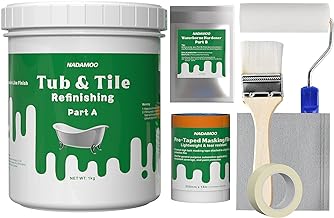
Best for: DIYers who want a brush-or-roller kit with preparation supplies. The package lists compound, hardener, gloves, brush, roller, masking film, masking tape, sandpaper, and a user manual. Fiberglass is among the listed surface types.
Application involves mixing two parts and applying the mixture with a brush or roller. The resulting surface is described as semi-gloss. The instructions state a 24-hour cure and advise waiting the full seven days for maximum hardness before taking a hot bath.
Limitation: A stated hot-bath waiting period does not establish suitability for a heated hot tub. Confirm hot-tub compatibility and follow the complete cure instructions.
Buying Guide: Choosing A Fiberglass Hot Tub Coating
Is the coating rated for a hot tub?
Start by checking the product label and contacting the manufacturer. Confirm that the coating is approved for fiberglass and for the specific conditions in your tub, including heated water, repeated immersion, and water-treatment chemicals. A product described for bathtubs is not automatically suitable for a hot tub.
Which application method fits the repair?
Sprays can be convenient for smaller areas but require careful masking and ventilation. Roll-on and brush-on kits give you a manual application method; pour-on products use a different process that requires following the instructions closely. Compare the method with the size, shape, and condition of the surface you plan to refinish.
What preparation and cure time should you plan for?
Surface preparation affects whether a coating can adhere. Follow the kit’s specific cleaning, sanding, masking, mixing, and application steps rather than relying on a generic process. Keep the tub out of service for the full stated cure period. Touch-dry time is not the same as readiness for water exposure or hot-tub operation.
How should you compare finishes and odors?
Choose a finish description that matches your expectations, such as glossy or semi-gloss, while prioritizing verified compatibility. If odor is a concern, compare product guidance and required ventilation; “low odor” or “odorless” does not mean ventilation and safety directions can be ignored.
Frequently Asked Questions
Can you refinish a fiberglass hot tub with bathtub paint?
Possibly, but only use a product whose manufacturer confirms it is suitable for fiberglass hot tubs and their operating conditions. Bathroom-tub compatibility alone is not enough.
How long should a refinished hot tub remain empty?
Follow the coating’s full cure and water-exposure instructions. The products listed here specify different cure guidance, so do not assume one timeline applies to another.
Is spray or roll-on coating better for fiberglass?
Neither method is universally better. Choose based on the product’s confirmed hot-tub compatibility, the repair area, and the application method you can follow accurately.
Can refinishing fix cracks or structural damage?
A surface coating is not evidence of a structural repair. Ask a qualified repair professional how to address cracks, leaks, or damage before refinishing.