On-demand, energy-efficient hot water is within reach with modern tankless models. This guide highlights five practical options, explaining who each is best for and why. Whether you want a compact under-sink unit for a kitchen or a whole‑house system, these selections emphasize efficiency, space savings, and dependable performance. The overview below helps buyers compare installation needs, energy use, and output capabilities to choose wisely.
| Product | |||
|---|---|---|---|
| WINTEMP 18kW Electric Tankless | Whole-house electric | 2–3 bathrooms in temperate climates | |
| 110V 3000W Under-Sink | Compact electric | Kitchen or powder room hotspots | |
| Jflapil 110V 3000W | Compact electric | Small spaces needing instant hot water | LED display with precise temp control |
| ThermoMate 8kW 240V | Point-of-use / whole-house | Single- or multi-point use with steady output | Self-modulating, 1.56 GPM at 35°F rise |
| ThermoMate CZ422NG | Natural gas multi-point | Higher flow needs with gas fuel | Up to 5 GPM; CSA certified protections |
WINTEMP 18kW Electric Tankless Water Heater

The WINTEMP WN18 is a 18kW, 240V electric model with self-modulating temperature control and a maximum output of 4.3 gallons per minute. It automatically adjusts energy use based on flow rate and incoming water temperature, aiming to maintain stable shower temperatures. This unit is best for residential showers in homes with mild to moderate climate exposure and adequate electrical service. A key limitation is the electrical requirements: it typically needs two 40 Amp breakers and appropriate wiring, which may require professional installation. Best for: homes with two to three bathrooms in suitable electrical panels.
110V Tankless Water Heater Electric, 3000W
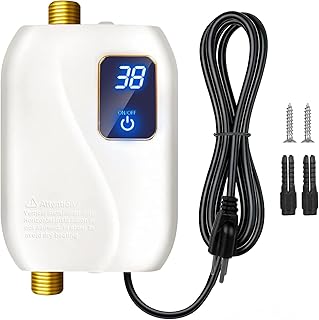
This compact under-sink unit delivers rapid on-demand hot water with a 3000W heating element and an LED display. It supports temperature settings in either Fahrenheit or Celsius and claims high thermal efficiency up to 98%. It features IPX4 waterproofing, leakage protection, dry-burn safeguards, and automatic shutoff when idle. Best for: apartments, kitchens, or bathrooms where space is limited and a point-of-use solution is sufficient. Caution: 110V units may have lower flow at cold inlet temperatures compared with higher-voltage models.
Jflapil 110V 3000W Tankless Water Heater

This 110V model provides instant heating with a stainless steel/ABS construction and a built-in LED for temperature monitoring. It supports a 82°F to 131°F range and offers real-time status updates. It is compact and wall-mounted, designed for varied spaces like kitchens, bathrooms, or RVs. Best for: individuals needing a compact, easy-to-install hot water solution. Limitation: 3000W capacity may limit simultaneous hot water for larger households.
ThermoMate 8kW Electric Tankless Water Heater
This 8kW, 240V unit is positioned as a point-of-use heater with self-modulating technology and a 1.56 GPM rating at a 35°F rise. It emphasizes energy savings through matching power to actual demand. It suits smaller homes or zones requiring additional hot water without large-scale electrical upgrades. Best for: single bathroom or small apartments where a compact electric heater is sufficient. Caution: higher temperature rises will reduce flow rate.
ThermoMate CZ422NG Natural Gas Tankless

The CZ422NG gas model delivers up to 5 GPM with 113,000 BTU input, designed for on-demand hot water in busy households. It uses a smart flow sensor and a control chip to maintain stable temperature and prevent cold-water interrupts. Best for: homes with higher hot water demand and natural gas supply. Caution: gas-fired units require proper venting, installation, and code compliance.
Buying Guide: Key Considerations for Energy Efficient Tankless Water Heaters
- Flow rate needs: Determine gallons per minute (GPM) required for peak usage (showers, sinks, appliances) to choose a unit with adequate hot water output.
- Electrical and gas requirements: Electric models demand appropriate service panels and wiring; gas models require venting and fuel supply considerations.
- Temperature rise and thermostatic control: Look for models with stable temperature control and self-modulating or smart-flow features to maximize efficiency.
- Space and mounting: Under-sink and compact units suit tight spaces; wall-mounted designs save floor space.
- Safety features: IP ratings, dry-fire protection, leak protection, overheat protection, and fault detection improve reliability.
- Energy efficiency metrics: Self-modulating systems reduce active power when water flow is low, lowering energy use compared with traditional tanks.
- Installation complexity: Some models require professional wiring or gas installation; verify compatibility with your home’s existing systems.
- Longevity and maintenance: Consider availability of replacement parts, ease of service, and manufacturer support.
Frequently Asked Questions
What is the main advantage of a tankless water heater for energy efficiency?
Tankless units heat water on demand, avoiding standby heat losses common with storage tanks and using self-modulating controls to adjust energy use to actual demand.
Do I need special electrical service for an electric tankless heater?
Yes. Many electric models require dedicated circuits, often dual breakers with appropriately sized wiring. A licensed electrician should verify service capacity before installation.
Can tankless water heaters supply hot water for multiple fixtures at once?
Yes, but the total GPM rating limits simultaneous use. Larger homes may require higher-capacity electric or gas units or multiple units running in parallel.
Are gas-powered tankless heaters safe for indoor installation?
Gas models require proper venting, combustion safety, and adherence to local codes. Professional installation is recommended.
What maintenance is needed for tankless systems?
Regular descaling in hard-water areas and periodic inspections of venting, connections, and electrical components help maintain efficiency and longevity.