Looking for a complete water filtration solution for your home? This guide compares five popular full-system options to help you choose the right setup. The selections cover under-sink reverse osmosis, countertop filtration, whole-house filtration, and enhanced multi-stage RO systems. Each choice targets specific needs—compact installation, whole-home protection, or improved taste and mineral balance. The buyer-friendly summaries below explain who benefits most from each system and highlight key trade-offs.
| Product | |||
|---|---|---|---|
| iSpring RCC7AK-BN | Under-Sink RO System | Top-mounted faucet design simplifies installation | |
| DREO RO Countertop System | Countertop RO | Renters or kitchens with limited under-sink space | Portable and no permanent plumbing needed |
| Express Water Whole House 3-Stage | Whole House Filtration | Protects appliances and improves water at every tap | Includes gauges and a sturdy bracket |
| iSpring WGB32BM | Whole House Iron/Manganese Filter | Homes with iron, manganese, or taste/odor issues | Reduces specific contaminants; may need combination with RO for drinking water |
| Home Master TMAFC-ERP | Under-Sink RO with Remineralization | Low waste/rate RO with mineral balance | Complex setup; requires more space and maintenance planning |
iSpring RCC7AK-BN NSF Certified 6-Stage RO System

The iSpring RCC7AK-BN is a six-stage under-sink reverse osmosis system with alkaline remineralization to restore minerals after filtration. It targets households seeking high-purity drinking water with a favorable mineral balance. Best for homeowners who want settled taste with a pH-balanced finish and a compact, top-mounted faucet design for straightforward installation. A potential limitation is the need for under-sink space and regular filter changes to maintain performance.
DREO Countertop RO Water Filtration System

The DREO countertop RO system is a portable, installation-free option that delivers high-purity water with 99.9% contaminant removal. It’s best for renters, kitchens without permanent plumbing, or users who want a convenient, space-saving solution. Its main trade-off is countertop footprint and the need to manage filtration turnover and refills without fixed plumbing.
Express Water Whole House Filtration System, 3-Stage

The Express Water Ultimate 3-Stage Whole House System provides comprehensive filtration across the entire home. It’s best for households seeking immediate improvements at every tap, reduced chlorine and heavy metals, and easier monitoring via included pressure gauges. A potential limitation is the larger installation footprint and the need for bracket mounting and space in a utility area.
iSpring WGB32BM Iron Filter for Whole Home
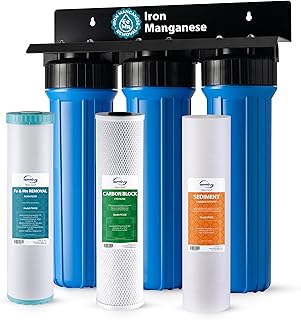
The iSpring WGB32BM focuses on removing iron, manganese, chlorine, sediment, and odor to improve water taste and protect plumbing. It’s best for homes with noticeable iron or odor issues and for those wanting a reliable pre-treatment before drinking-water purification. It’s not a complete drinking-water system by itself, so pairing with a drinking-water RO or cartridge filter may be necessary for full household use.
Home Master TMAFC-ERP Artesian Full Contact RO

The Home Master TMAFC-ERP is a seven-stage RO system with patented 2-pass remineralization and a fast 4.5-second fill rate. It aims to deliver mineral-balanced, purified water while reducing wastewater with a 1:1 waste ratio. Best for homes prioritizing high water quality and faster filling, but it requires more space and careful installation planning. A limitation is its longer setup process and the need for ongoing maintenance across multiple stages.
Buying Guide
What type of filtration do you need?
Choose under-sink RO systems for maximum contaminant removal in a compact footprint. Whole-house systems protect every faucet and appliance, while countertop units suit renters or spaces where plumbing changes are not feasible.
How important is remineralization and water balance?
Systems with remineralization (like the iSpring RCC7AK-BN and Home Master TMAFC-ERP) restore minerals after RO filtration, improving taste and potential health benefits. If mineral balance is a priority, select models offering pH-balanced or remineralized outputs.
What about installation and space?
Under-sink setups require cabinet space and plumbing connections; installation-free countertop models avoid plumbing but take counter space. Whole-house systems demand space in a dedicated utility area and bracket mounting.
Maintenance and running costs
Consider filter change frequency and the cost of replacement cartridges. Systems with fewer but higher-capacity stages may reduce maintenance overhead, while multi-stage setups can offer better contaminant reduction at the cost of more parts to service.
Water usage and efficiency
RO systems typically produce wastewater. Look for models with favorable waste ratios or permeate pumps to minimize water loss. For households aiming to reduce waste, pair with efficient pre-filters and consider a remineralization step to improve taste without extra filtration steps.
Compatibility with water quality
Assess your local water chemistry. If iron or sulfur odors are a primary concern, add an iron/manganese pre-filter before RO. For widespread contaminants, a multi-stage approach with a pre-filter and post-filter remineralization often yields the best overall water quality.
FAQ
- What is the difference between a countertop and under-sink RO system?
Under-sink systems mount under the sink and connect to your faucet for filtered water. Countertop RO units sit on the counter and are typically more portable and renter-friendly. - Do these systems remove minerals from water?
Most RO systems remove minerals; remineralization stages add minerals back to improve taste and pH balance. - Is a whole-house filtration system worth it?
If you want filtered water from every tap and to protect appliances, a whole-house system provides comprehensive protection and taste improvements across the home. - How often should filters be replaced?
Replacement intervals depend on the model and water usage. Check manufacturer recommendations and monitor indicator features where available. - Will these systems remove bacteria?
RO systems remove many contaminants, but for bacteria specifically, a certified UV or specialized filtration stage may be necessary in some setups. - What should I consider before buying?
Consider installation space, water usage, local water quality, maintenance costs, and whether you prioritize under-sink purity or whole-house protection.